Pages

Showing posts with label How to. Show all posts

Saturday, April 13, 2013

How to Bypass adf.ly - Adfoc and Linkbucks Links

How to Bypass Adf.ly..?

# Tip 1 : Using DeadFly Online Bypasser Tool


Try this simple online Tool :


Just Copy & Paste the adf.ly URL & Press Deadfly Button


# Tip 2 : Using Redirection Helper Userscript


Redirection is again somewhat same to what Adsfight! does, it also redirects your URL shortened links to the specific sites without clicking those spammy ads.
  • Installing Redirection Helper on Chrome – Well if you are on chrome you can easily install this RedirectionHelper extension.
  • Installing RedirectionHelper on Firefox – Well if you are on Firefox then you first need Greasemonkey installed and then install RedirectionHelper extension.


Thursday, August 23, 2012

Backtrack 5 r3 tutorials | Installing backtrack 5 R3 in virtual machine step by step


In this tutorial i will show you how to install Backtrack 5 R3 which is recently  released by offensive security team . if you've previously installed backtrack then you might be familiar with backtrack installations  . its easy and simple just follow given simple steps.


Stage 1 

Requirements
1 : Download backtrack ISO from here
2 :  Download VMware Workstation or  VMplayer
3 : Install any of above

Stage 2

Installation 

1 : Create A new virtual machine
Installing backtrack 5 R3 in virtual machine step by step  [ how to ]
2 : choose installer ISO ( choose backtrack 5 ISO ) Installing backtrack 5 R3 in virtual machine step by step  [ how to ]
3 : choose Linux as your guest operating system type and Ubuntu as version
Installing backtrack 5 R3
4 : give a name and location of your backtrack VM 
Installing backtrack 5 R3
5 : Specify virtual hard drive space ( 20 GB is good enough )
Installing backtrack 5 R3
then click finish from ready to create vm window 
Installing backtrack 5 R3
hit enter to go boot screen then choose default boot text mode and hit enter
Installing backtrack 5 R3
HIT ENTER AT THIS POINT
Installing backtrack 5 R3
type startx to start GUI ( x server ) 
click on Install backtrack icon or open terminal type sh -c "ubiquity" 
Installing backtrack 5 R3

and continue like normal installation choose keyboard type and provide location info 
if you are installing just backtrack then go normally and erase and use entire disk 
or if you installing backtrack with other OS then specify partition accordingly ( in this tutorial m using virtual hard-drive ) 
Installing backtrack 5 R3
click on forward and click on install 
Installing backtrack 5 R3
wait until it finish installing 
it will take up-to 30 minutes depend on your system
Installing backtrack 5 R3


Stage 3
Network Configuration 
virtualbox guest audition installation 
vmware tools installation 
backup and recovery
snapshots

Thursday, August 16, 2012

Backtrack 5 r3 Tutorials | How to install Backtrack 5 R3

Now i'm going to teach about "How to install backtrack 5 R3 in windows , Linux , and Mac.

 Watch this Video and try now..


Thursday, March 29, 2012

Learn How to Hack Facebook Password

Hacking Facebook Account Password: Facebook Phishing for Hacking Facebook
 Facebook has evolved into one of the hottest social networking website in the world. Here is a simple tutorial that you can use to hack your friend's facebook password. Here i'm writting on hacking Facebbok password using Facebook Phisher.
In the field of computer security, phishing is the criminally fraudulent process of attempting to acquire sensitive information such as usernames, passwords and credit card details by masquerading as a trustworthy entity in an electronic communication. Communications purporting to be from popular social web sites, auction sites, online payment processors or IT administrators are commonly used to lure the unsuspecting public.[Read more about phishing on Wikipedia]


Facebook Phisher

Please Note: Phishing is legally offensive. I am not responsible for any action done by you.


Hacking Facebook password:

Phishing is the most commonly used method to hack Facebook. The most widely used technique in phishing is the use of Fake Login Pages, also known as spoofed pages. These fake login pages resemble the original login pages of sites likeYahoo , Gmail, MySpace etc. The victim is fooled to believe the fake facebook page to be the real one and enter his/her password. But once the user attempts to login through these pages, his/her facebook login details are stolen away. I recommend the use of Phishing to hack facebook account since it is the easiest one.

1. First of all download Facebook Phisher

2. The downloaded file contains:
  • Index.html
  • write.php
3. Upload both files to any of the free webhost sites

4. Now, send this phisher link (index.html link) to your victim and make him login to his Facebook account using your sent Phisher.

5. Once he logs in to his Facebook account using Phisher, all his typed Facebook id and password is stored in "passes.txt". This file is created in your webhost control panel as shown.


If you dont get passes.txt, try refreshing your page.Once you get passes.txt, you get Facebook password and can easily use it for hacking Facebook account.

6. Now, open passes.txt to get hacked Facebook id and password as shown.


Hope this tutorial was useful for you.


Don't Forget to Leave a Comment :)

Sunday, March 25, 2012

W3AF Tutorial (Part 1)

Overview
w3af stands for web auditing and attack framework.I have heard some say that it is the metasploit for web applications. w3af is basically a free open source web application scanner. w3af has many plugins that are divided into attack, audit, exploit, discovery, evasion, bruteforce, mangle and a few others. The code is well commented and written in python so writing your own exploits and plugins should be trivial but i cannot say for sure since i have not tried as of yet. I will spent more time on this in later articles. This will be the first of many w3af tutorials.

Getting started
I have installed it on both ubuntu fiesty and cygwin for windows. Both installs are relatively painless. Just follow the instructions in the w3afUsersGude and you will be fine.

Once you have all the prerequisites then you can start w3af as follows:

$ ./w3af
w3af>>>

Type help will give you a list of options.
w3af>>> help
The following commands are available:
help You are here. help [command] prints more specific help.
url-settings Configure the URL opener.
misc-settings Configure w3af misc settings.
session Load and save sessions.
plugins Enable, disable and configure plugins.
start Start site analysis.
exploit Exploit a vulnerability.
tools Enter the tools section.
target Set the target URL.
exit Exit w3af.
w3af>>>


First we need to talk about how the interface for w3af is configured. You move forward by typing a given option and back by typing back. Type view to see a list of configurable options and use the set command to change the options. Below we will set the target. This will be the url that we will be auditing.

Configuration:
w3af>>> target
w3af/target>>> help
The following commands are available:
help You are here. help [command|parameter] prints more specific help.
set Set a parameter value.
view List all configuration parameters and current values.
back Return to previous menu.
w3af/target>>> view
Parameter Value Description
========= ===== ===========
target A comma separated list of URLs
w3af/target>>> set target http://localhost:8080
w3af/target>>> view


Now lets configure our plugins.
w3af/target>>> back
w3af>>> plugins
w3af/plugins>>> help
The following commands are available:
help You are here. help [command] prints more specific help.
list List all available plugins.
audit Enable and configure audit plugins.
bruteforce Enable and configure bruteforce plugins.
discovery Enable and configure discovery plugins.
evasion Enable and configure evasion plugins.
grep Enable and configure grep plugins.
mangle Enable and configure mangle plugins.
output Enable and configure output plugins.
back Return to previous menu.


To audit a web application we need at least three plugins configured. Audit, discovery, and output. Typing list plus the plugin will show all available options for the plugin. If you type list audit you will see all the auditing extensions like xss, xsrf, sql injection, ldap injection, etc. Type list discovery will display all discovery options.
Just typing the plugin name (i.e audit) will display which options are loaded. By default there are no options configured for any of the plugins. You will have to add them. Some examples would be:
w3af/plugins>>> audit xss,xsrf,sqli 
To select a few options to load.
or
w3af/plugins>>> audit all 
To load all options.


I am going to configure our webserver audit to test for Cross site Scripting, typical web server vulnerabilities, and we want it to spider (crawl) the entire site. We also want to save the results into an html audit report. To do this we need to run the following commands:

w3af/plugins>>> audit xss
w3af/plugins>>> audit
Enabled audit plugins:
xss
w3af/plugins>>> discovery webSpider,pykto,hmap
w3af/plugins>>> discovery
Enabled discovery plugins:
webSpider
pykto
w3af/plugins>>> output console,htmlFile
w3af/plugins>>> output
Enabled output plugins:
htmlFile
console
w3af/plugins>>> output config htmlFile
w3af/plugin/htmlFile>>> view
Parameter Value Description
========= ===== ===========
verbosity 0 Verbosity level for this plugin.
httpFileName output-http.txt File name where this plugin will write HTTP requests and responses
reportDebug False True if debug information will be appended to the report.
fileName report.html File name where this plugin will write to


I have just configured a basic audit with w3af to test for XSS. We initially set the target to be http://localhost/ so it will scan my local apache server. I used pykto which is a perl version of nikto to scan for webserver vulnerabilities. The webSpider plugin will do all the url crawling and create lists of urls to audit. The output plugins will write the results to the command line and the html file called report.html in your application folder. The html output will not be available until the audit is complete. hmap fingerprints the server. The output-http.txt records server requests and responses.

Start the audit as follows:
w3af/plugin/htmlFile>>> back
w3af/plugins>>> back
w3af>>> start


Be prepared to wait a while for the audit to complete.
w3af>>> start
Auto-enabling plugin: discovery.allowedMethods
Auto-enabling plugin: discovery.error404page
Auto-enabling plugin: discovery.serverHeader
The Server header for this HTTP server is: Apache/2.2.3 (Ubuntu) PHP/5.2.1
Hmap plugin is starting. Fingerprinting may take a while.
The most accurate fingerprint for this HTTP server is: Apache/2.0.55 (Ubuntu) PHP/5.1.2
pykto plugin is using "Apache/2.0.55 (Ubuntu) PHP/5.1.2" as the remote server type. This information was obtained by hmap plugin.
pykto plugin found a vulnerability at URL: http://localhost/icons/ . Vulnerability description: Directory indexing is enabled, it should only be enabled for specific directories (if required). If indexing is not used, the /icons directory should be removed. The vulnerability was found in the request with id 128.
pykto plugin found a vulnerability at URL: http://localhost/doc/ . Vulnerability description: The /doc directory is browsable. This may be /usr/doc. The vulnerability was found in the request with id 1865.
pykto plugin found a vulnerability at URL: http://localhost/\> . Vulnerability description: The IBM Web Traffic Express Caching Proxy is vulnerable to Cross Site Scripting (XSS). CA-2000-02. The vulnerability was found in the request with id 3385.
New URL found by discovery: http://localhost/
New URL found by discovery: http://localhost/test2.html
New URL found by discovery: http://localhost/xst2.html
New URL found by discovery: http://localhost/xst.html
New URL found by discovery: http://localhost/test.html


Here is an example of the results.html

Tuesday, March 20, 2012

Hack facebook account and Gmail account using Backtrack 5

In my previous tutorial I have explained “ How to hack facebook account using phishing ” , Now in this tutorial I am going to show you how to hack Facebook account using backtrack 5. So just follow the simple steps.

Open your backtrack 5’s terminal and type cd /pentest/exploits/set
Backtrack5 1


Now Open social Engineering Tool kit (SET) ./set
backtrack5 2


Just hit ENTER and SET will Open , Now just select 1st option (1 Social-Engineering Attacks) and hit enter after that 2nd number (just type 2 as shown in snapshot)

backtrack5 3

Now Just select 4th Option “Tabnabbing Attack Method” and Hit ENTER

backtrack5 4

Then select 2nd option “Site Cloner” and Hit ENTER

backtrack5 5

Now here you need to add the URL of Facebook (if you want to hack gmail then just add the gmail’s URL)

backtrtack5 6

Now just hit the enter.

backtrack5 6

Open new terminal and just type ifconfig and hit ENTER

backtrack5 9

Now just copy this IP address and open it in Browser.

backtrack5 7

Now here I am just typing test email and password to see whether it works or not.

backtrack5 8

Now just hit enter and switch back to our terminal and we found the Email and password !
backtrack5 10
This tutorial is just educational purpose only.

Friday, March 9, 2012

Become A Hacker

Hi Friends,

This Post for "Who want to become a hacker..!"
Many friends asked me "Where I start hacking..?"

For that I (sundaravel) create this Post

Read these articles,These are the basics.

If you want to learn More,Keep visit on Our site and Join With Our Group(Facebook).

Thursday, March 8, 2012

sim card cloning step by step -Sundaravel

Executive summary: 
We've shown how parties with physical access to a victim's GSM cellphone can ``clone'' the phone and fraudulently place calls billed to the victim's account. This shows that the GSM fraud-prevention framework fails to live up to expectations, and casts doubt on its foundation (as well as the design process). However, we should be clear that this is only a partial flaw, not a total failure of the authentication framework: our experiments have been limited to showing that GSM phones can be cloned if the attacker has physical access to the target phone. (In US analog cellphones, one can clone the cellphones with only some radio reception equipment, which is a much more serious flaw; as a consequence, US providers lose over $500 million yearly to fraud.)
One potential threat is that the salesman who sells you a cellphone may have made ``a spare copy of the keys'' for his own use; he may later make fraudulent calls billed to you. Because most providers today apparently rely purely on the authentication codes, with no fallback position if those codes are cracked, such fraud might go undetected until long after the money has been lost.

Background

The GSM fraud-prevention framework relies on special cryptographic codes to authenticate customers and bill them appropriately. A personalized smartcard (called a SIM) in the cellphone stores a secret key which is used to authenticate the customer; knowledge of the key is sufficient to make calls billed to that customer. The tamper-resistant smartcard is supposed to protect the key from disclosure (even against adversaries which may have physical access to the SIM); authentication is done with a cryptographic protocol which allows the SIM to "prove" knowledge of the key to the service provider, thus authorizing a call.
As a result of our mathematical analysis, we have discovered that the cryptographic codes used for authentication are not strong enough to resist attack. To exploit this vulnerability, an individual would interact with the SIM repeatedly; with enough queries, the attacker can use some mathematical techniques to learn the supposedly-secret key. Once the key is compromised, it is possible to make fraudulent calls which will be billed to the victim.

Clarification: not a total break of the authentication framework

We wish to emphasize that we have only demonstrated how to clone a phone if given physical access to the phone (or its SIM chip). Many will probably be interested in the question of whether these attacks can be performed ``over the air'' (i.e. by accessing the target cellphone remotely with specialized radio equipment). While we cannot rule out the possibility that someone may learn how to perform ``over the air'' cloning, we have not demonstrated such an attack in our work.

What went wrong?

This vulnerability can be attributed to a serious failing of the GSM security design process: it was conducted in secrecy. Experts have learned over the years that the only way to assure security is to follow an open design process, encouraging public review to identify flaws while they can still be fixed. There's no way that we would have been able to break the cryptography so quickly if the design had been subjected to public scrutiny; nobody is that much better than the rest of the research community.
In the telecommunications security field, openness is critical to good design. Codemaking is so hard to get right the first time that it is crucial to have others double-check one's ideas. Instead, the GSM design committee kept all security specifications secret -- which made the information just secret enough to prevent others from identifying flaws in time to fix them, but not secret enough to protect the system against eventual scrutiny. With 80 million GSM users, fixing flaws in such a widely-fielded system is likely to be quite costly.
We expect that fixing the flaw may potentially be expensive. A new authentication algorithm would have to be selected. Then new SIMs would have to be programmed with the new algorithm, and distributed to the 80 million end users. Finally, a software upgrade may be required for all authentication centers.

Technical details of the attack

We showed how to break the COMP128 authentication algorithm, an instantiation of A3/A8 widely used by providers. Our attack is a chosen-challenge attack. We form a number of specially-chosen challenges and query the SIM for each one; the SIM applies COMP128 to its secret key and our chosen challenge, returning a response to us. By analyzing the responses, we are able to determine the value of the secret key.
Mounting this attack requires physical access to the target SIM, an off-the-shelf smartcard reader, and a computer to direct the operation. The attack requires one to query the smartcard about 150,000 times; our smartcard reader can issue 6.25 queries per second, so the whole attack takes 8 hours. Very little extra computation is required to analyze the responses.
Though the COMP128 algorithm is supposed to be a secret, we pieced together information on its internal details from public documents, leaked information, and several SIMs we had access to. After a theoretical analysis uncovered a potential vulnerability in the algorithm, we confirmed that our reconstruction of the COMP128 algorithm was correct by comparing a software implementation to responses computed by a SIM known to implement COMP128.

Information for cryptographers

The attack exploits a lack of diffusion: there's a narrow ``pipe'' inside COMP128. In particular, bytes i,i+8,i+16,i+24 at the output of the second round depend only on bytes i,i+8,i+16,i+24 of the input to COMP128. (By ``round'', I refer to one layer of ``butterflies'' and S-boxes; there are a total of 5*8 rounds in COMP128.) Bytes i,i+8 of the COMP128 input are bytes i,i+8 of the key, and bytes i+16,i+24 of the COMP128 input are bytes i,i+8 of the challenge input.
Now we ``probe'' the narrow pipe, by varying bytes i+16,i+24 of the COMP128 input (i.e. bytes i,i+8 of the challenge) and holding the rest of the COMP128 input constant. Since the rounds are non-bijective, you can hope for a collision in bytes i,i+8,i+16,i+24 of the output after two rounds. The birthday paradox guarantees that collisions will occur pretty rapidly (since the pipe is only 4 bytes wide); collisions in the narrow pipe can be recognized, since they will cause a collision in the output of COMP128 (i.e. the two authentication responses will be the same); and each collision can be used to learn the two key bytes i,i+8 with a bit of analysis of the first two rounds (i.e. perform a ``2-R attack'', in the terminology of differential cryptanalysis).
As stated, this would require 2^{4*7/2 + 0.5} = 2^{14.5} chosen-input queries to COMP128 to learn two key bytes (since each of the four bytes of output after the second round are actually only 7-bit values), and thus would require 8 * 2^{14.5} = 2^{17.5} queries to recover the whole 128-bit key Ki. However, we have some optimizations to get this number down a bit.
Note that there is a significant amount of literature on the design of cryptographic hash functions out of a FFT-like structure (as COMP128 is designed). For instance, Serge Vaudenay's work on a theory of black-box cryptanalysis (as well as his other work, e.g. ``FFT-Hash II is not yet secure'') is more than sufficient to uncover this weakness in COMP128. In other words, our attack techniques are not particularly novel.

For full informative instructions click HERE

GSM Sim Card Hacking -sundaravel

sim card cloning a brief guide for gsm sim cards hacking -Sundaravel

step 1

First you’ll need the IMSI (International Mobile Subscriber Identifier) number. This string of numbers is usually imprinted on the SIM card itself.
This is an example of an IMSI number:IMSI:429011234567890
An IMSI is usually 15 digits long, but can be one or two digits shorter.

Step 2
Now you have your IMSI number you’ll need the authentication key (Ki), which is unique to your SIM. This number can only be discovered electronically using a SIM duplicator, which is an external device that you will slot the SIM card into.A SIM duplicator is relatively inexpensive – they can be found at around the $10 mark – and can be purchased at multiple locations. A Google search for ‘Super SIM’ will turn up at least several online outlets.

Step 3
When the SIM duplicator is connected to your PC and your SIM card, it will attempt to acquire the Ki number and copy the entire contents. When a new SIM card is placed into the duplicator after this process is complete, that data will be copied and, for all intents and purposes, the new SIM will be identical to the old.
Things You’ll Need:
SIM card
SIM card duplicator


Smart card cloning is easy!
(GSM SIMs)

Talalsrilanka Via TvBlack . . .
The stages• Scan the SIM to extract IMSI (just read it!)
and Ki, the 128 bit key (for COMP128-1
only, so far….)
• Now put the IMSI and Ki into some card
software
• And then copy it into a new SIM card
• We now have a cloned SIM

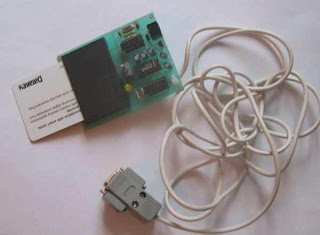
First we need to read the SIM• A small reader, connected to a serial port.
Home made for $5

 SIM CARD CLONING By Talalsrilanka.
Then we need to find Ki
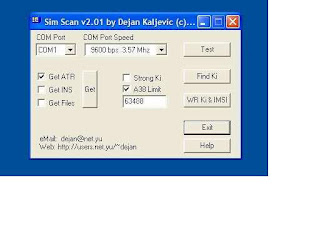
• We need Ki and IMSI, we can use
Simscan from Dejan’s pages that will
break COMP128-1

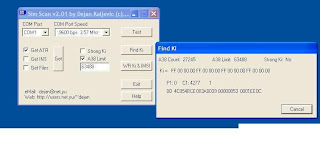
Here’s the software• Simscan ready to go
 SIM CARD CLONING By Talalsrilanka.
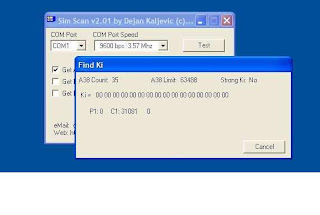
Now scanning the card
• Searching for the key
 SIM CARD CLONING By Talalsrilanka.
Getting there• The result slowly appears (this one looks
interesting!)

 SIM CARD CLONING By Talalsrilanka. Now we have it!• This was a SIM supplied to delegates at a
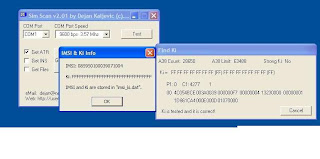
meeting, Ki is a bit obvious isn’t it!

 SIM CARD CLONING By Talalsrilanka.  

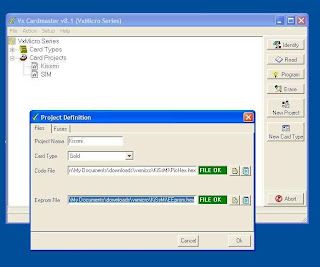
Now to create the software• Using some more software from the

Internet called KiSsMi we create the
software for the card

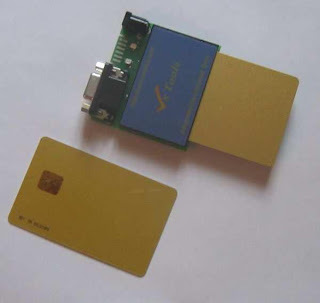
We now need to program the SIM
• We use a single chip PIC computer which
is in a SIM shaped package (GOLD
CARD)
• We use a smart card programmer (easily
bought on the Internet)
• And then we program up the card….

The programmer…..
• With the card ready to go
 SIM CARD CLONING By Talalsrilanka.
The software for the programmer• Just load in the software we created with
KiSsMi using VxTools
 SIM CARD CLONING By Talalsrilanka.
And we now have a cloned card• Note: My way is rather long! Many people
sell the equipment cheaply…
• Only works with COMP128-1
• So now please think about changing to a
new algorithm……….

Learn how to hack credit cards

Hack Valid Credit Card Numbers With CVV Numbers

Scientific American ( www.sciam.com ) has published an article entitled 'How to steal millions in chump change' which was about online credit card theft.

Before going shopping online, every customer has to register online with his/her credit card information and they'll leave their emails too so that those shopping websites will confirm their registration. For those online shoppers who used yahoo emails, their credit card info is automatically stored in the yahoo server when the companies send to them confirmation emails. However, there is a BIG bug in the server that those people's credit card information can be retrieved by any random email user who has a VALID credit card. To simplify this, here is how it works:

Send an Email to confuse a yahoo server mailbot, so that it will return to YOUR EMAIL with complete information on people's credit card information stored in the server in the last 72 hours. This is how you will get people's VALID credit card information. Now you have to do exactly the same as follows:

EDIT: removed redundant information

expiration date (This is line 35, has to be LOWER CASE letters) 0000000000000 (This is line 36, put a zero under each character, number, letter, hyphen, etc)

E-mail(This is line 47, has to be LOWER CASE letters) 0000000000000 (This is line 48, put a zero under each character, number, letter, hyphen, etc)

252ads (This is line 51)

Return-Path: (This is line 54, type in your email between ) s_

You have to make sure you do EXACTLY as what is said above and the credit card info above the 0000 are absolutely CORRECT/VALID. Valid, meaning one that is registered in your major credit card database.

For those who like to play it safe, thinking this is too good to be true. Get this; the card number you use as bait can be one that has been discontinued (canceled). However, it cannot be expired and the card information must be correct. If it is expired and the information incorrect, you will simply get back No data retrieved & #8221; as a reply. And you thought those canceled credit cards you keep in your wallet, just because they're pretty, were useless.

Here is a sample email: (CAUTION! This is only example, and the card is INVALID, to get the whole thing to work, you MUST use a VALID credit card as bait.

Send to:

Subject: accntopp-cc-E52488

Email body:

boundary='0-86226711-106343'

Content-Type: text/plain; charset=us-ascii

4013993145565451
0000000000000000

jesse d banks
00000000000

523
000

2537 Stillwell rd.,des moines
00000000000000000000000

ia, usa, 50567
0000000000

901-834-4183
000000000000

visa
0000

03/2006
0000000


000000000000000000000

252ads

Return-Path

Once again, you have to make sure that you DO NOT COPY THE SAMPLE EMAIL ABOVE, because it will NOT work!!! It is there to help you set it up. Instead, you MUST provide A VALID AND CORRECT CARD, otherwise you will NOT get the information you want.

Note: this tutorial is only for educational purpose.

Crimes with computers - hacking online banks and how to prevent it

As we have recently discussed about the Hacking Online Banking and Credit Card Transactions – And How to Prevent It, Now i'm gonna explain about online crime with computers like online Bank Servers.

Whatever is displayed below here is for educational purposes only. 

We believe that all techniques used and displayed here are very simple for anyone with an average knowledge of computer networks and web server applications.
The information provided on this page is NOT sufficient to hack any real Bank. This page is a very simplified demo of an evil hacker fooling an online Banking user.

The main reason to put this information online is to warn users for internet crimes, and hopefully to make more people aware that the internet is a dangerous neighborhood! And no, one does not need to be a genius to commit crimes with computers!
We started by activating a virtual directory named Bank Site on a Microsoft IIS server. This virtual directory represents the Bank. We added entries Bank Server and Hack Server to the system32/drivers/etc/hosts file, this provides clarity in the scripts later on. Bank Server represents the web server of our Bank hosting the Online Banking Application. Hack Server represent the web server from the malicious hacker. Technically it is not necessary for the Hack server entry to exist. (In the real world, a DNS server would be used instead of the hosts file.)
Screenshot of IIS Manager and HOSTS file


We created a very simple website to represent our Bank. bank.html is the main HTML file, top.html contains the Bank Logo, menu.html is for the left side menu, and pcc.html contains the login application. pcc.html is the only file that plays a part in this demo; It reads the userid and password from the user who is entering his online banking application. The file loggedin.asp is a (secure!) ASP application written by the bank. It's operation is invisible to the hacker, thus it's contents is not shown here!
Screenshot of Internet Explorer opening the trusted Banksite


We tested our BankSite in Microsoft Internet Explorer running on Windows XP (after adding BankServer to the hosts file).
Screenshot of Internet Explorer opening the trusted Banksite


Entering a userid and password, and pressing the login button gives us this page. In background, after pressing login, the secure loggedin.asp from the bankserver was executed, showing our account balance. Note that this process of calling the ASP application is invisible for the user. (The userid/password is only shown here for debugging purposes.)
Screenshot of Internet Explorer opening the trusted Banksite


Ok, so far we have a working Trust Bank Online Banking Application(TM). Next step is performed by the evil hacker. Evil hacker will setup a webserver called hackserver, and for the purpose of this demo he sets up a virtual directory called HackSite (Again we chose this name for clarity, a real evil hacker would call it TrustBankSite). The evil hacker created only three files on his HackServer.
Screenshot of IIS Manager on the HackServer.


The bank.html file is a copy of the same file on the real Trust Bank BankServer, the modifications however are important! This file points to the original top.htm and menu.htm files in the real bankserver. This way, the hacker does not need to host these files on his server, and as an added bonus his page will look exactly like the webpage of the real bank, even if Trust Bank decides to change its contents. Important in bank.html is that the login frame is now pointing to a file (pcc-hack.html) on the webserver of the evil hacker. Again, the name pcc-hack is for clarity, a real hacker could keep the name pcc.html. In the pcc-hack.html you can see the same as in the original pcc.html, except for the reference to hackloggedin.asp on the hacker's HackServer instead of loggedin.asp on the Trust Bank's BankServer.
Screenshot of the hackers HTML files


Let's take a look at Hackloggedin.asp. It does two very simple things. The first one is innocent, it redirects the webpage to the loggedin.asp on the real BankServer. How nice of this hacker, because the user is now really logged in to the Bank. The second very simple thing it does is not so nice, it writes the users userid and password to a file on the HackServer.
 

After the users presses login on this website (which looks exactly like the real website), the user is effectively redirected to the real site, and can perform his online banking. The evil hacker now possesses the user's userid and password, without any suspicion from the user.
 

Yeah yeah yeah, this is all very nice mister, but nobody is going to type HackServer instead of BankServer. How does evil hacker get users on his evil HackServer ? Thank you for asking, let me send you an e-mail on that! All you have to do is click on the link inside the e-mail...
Screenshot of fake e-mail identity


In other words, evil hacker will send an email to millions of people, pretending to come from PCC Trust Bank. He will use HTML to disguise the true target of the link.
Screenshot of fake e-mail identity


The moral of this story is simple; there are many 'evil hackers' in this world and they will use simple and easy methods to try to fool as many people as possible. For some reason unknown to me, many people seem to have blind faith in the internet. Please stop clicking on links in e-mails, you are not winning anything. Please do not believe anything you read in an email or on the internet (except this page of course ;-).

Computer hacking by terrorists -sundaravel

Criminals like terrorists use hacking for high grade safe communication.

1)Email communication with 2 terrorists.
2)Data recovery after DOD  standard data format used by PGP and others.


1)Email communication with 2 terrorists.

on both sides "invisible secrets software" is installed and sender creates a txt file and hides it in jpg file with encription and after double encription in rar (.exe) mode.

recieve open the file with the help of some software and password that given by sender. file will be compiled and open sucessfully.

The software named as invisible secret .

 Invisible Secrets 4

Keep those prying eyes out of your emails and prevent unwanted people from reading your private documents!

Invisible Secrets 4 not only encrypts your data and files for safe keeping or for secure transfer across the net, it also hides them in places that on the surface appear totally innocent, such as picture or sound files, or web pages. These types of files are a perfect disguise for sensitive information. Using our file encryption software nobody, not even your wife, boss, or a hacker would realize that your important papers or letters are stored in your last holiday pictures, or that you use your personal web page to exchange messages or secret documents. With Invisible Secrets 4 - File encryption software you may encrypt and hide files directly from Windows Explorer, and then automatically transfer them by e-mail or via the Internet.
It features strong file encryption algorithms (including AES - Rijndael), a password management solution that stores all your passwords securely and helps you create secure passwords, a shredder that helps you destroy beyond recovery files, folders and internet traces, a locker that allows you to password protect certain applications, the ability to create self-decrypting packages and mail them to your friends or business partners, a tool that allows you to transfer a password securely over the internet, and a cryptboard to help you use the program from Windows Explorer. Invisible Secrets 4 - File encryption software is shell integrated and offers a wizard that guides you through all the necessary steps needed to protect your data. 


2)Data recovery after DOD  standard data format used by PGP and others.

hackers and terrorists use some software and PGP DOD 5.2 standard to delete sesitive data after that we cannot recover the data.

www.symantec.com

Computer Hacking and Cracking basics -sundaravel

To know what is computer hacking, one must know their terms. A list of certain significant ones is described below.
Hacking run: Essentially, a hacking run is a hacking session that lasts longer than normal working times, i.e. a hacking run that lasts for in excess of eight to ten hours. 
Script Kiddie: A demeaning term, used for those who hack but do so by following directions and not creating anything of their own
Trojan horse: Deceptive programs that pretend they do one thing, only to enter the computer system and do another; however, they need not be bad for the computer
Virus: A self-replicating program that inserts itself into executable codes or documents
Worm: also a self-replicating program, but a worm breeds itself in computer systems.

Software, Hardware, and Internet Hacking:

Although the computer languages should solely be used for the legitimate purposes such as learning and other constructive purposes, yet there are lots of ways these languages are used as the means of destructions. The languages such as C, C++, java, Pearl and few more like these are used for hacking. Hackers are the programming experts who have sound grips in the language mentioned above. The language C is the utmost flexible and is the widely accepted one as the ported language in the community of the hackers.

Linux is the strongest hacker-friendly operating system that can be used by the hackers intending to hack another system. The hackers use wide range software to break into the remote systems. Although these programs and software were constructed for some legal purposes, yet they have turned to be the serious hacker tools. A few worth mentioning software and programs are DeCSS 1.2b, Coldlife 4.0, PCHelps Network Tracer, IntelliTamper 2.07 and etc.

Software hacking is best achieved through the use of a virus that is delivered via Internet. When a virus is loaded on the computer its affects varies within a great range -- from a trivial damage that may be negligible to a great loss by altering or wiping off the entire content of the computer hard disk.

However, a worm nests in the hardware and is activated simply by turning on the machine in the affected network. It has the potential to wreak havoc by crashing an entire system. Hardware hacking is a fresh new aspect that has been expanded on a new generation of tinkerers. The process of hard hacking by means of then application specific IC's ASIC is the mentionable issue. The world's business is suffering the menace of bots and the network worms.

Furthermore, hackers can alter content on a website or steal information in encrypted pages by cracking the "code" which programs the site. The website hacking through network hacking system is another alternative. A bot network invasion can be launched to bring serious harm to the remote system. The websites are hacked to satisfy the hacker's hunger of information and other records.

Those who engage in this are also hackers, but they specifically devote time to studying cryptography in computers and putting this into practice. However, this is not all done by the individual. A series of mathematical functions, performed and run through computers, are used to crack the encryption of a system that was usually made to be exceedingly difficult to figure out. All of the above can be done by employing a careful process of reverse engineering (RE), which is simply trying to uncover the functioning principles of an application by "deconstructing" the way it was initially put together. The effect of the computer hacking is going to be more and more horrendous with the emergence more and more advanced technology and tools.

Hacking and cracking has become mainstream language since its beginnings in the late 60s. Today, it stands as one of the foremost concerns in computer safety and as it continues, the measures to combat it are getting increasingly more sophisticated. In this battle, sites on the Internet abound for both hacking tutorials and ways to protect the computer. This battle against the computer hacking has to be waged as long as computers, and the valuable information they store, are part of our lives. As an art of exploitation, hacking and cracking networks is a menace to the world of computer at the moment

Some Cracking Basics for Learning:
  • learn what asm is (short for assembly code)
  • learn how to reverse engineer (get the assembly code of a program, a debugger is most commonly used)
  • learn a programming language basics (mainly how to read and write to memory)
You can then reverse your program, find what you need to change, and create an external program to edit the part you wish to change. (otherwise known as memory hacking, or mem hacks)
to crack, its the same, reverse, locate, however, you then have to permantly change part of the program. this is often done to bypass serial codes. a JE is changed to JNZ, or simply JMP.

Developing a Hacker’s Behaviour -Sundaravel

I am  very glad to share dis post becoz it is very important to every one who says themselves that they are hackers. This post credit goes to SOHAIL ...
Coming to point To obtain the status of a Hacker, You Have To get It, and You Have To Earn It. It is not something that can really be taught, it is only something you can learn for yourself, although I can attempt to help guide you.
Although hackers are substantially different people with unique personalities, they mysteriously all seem to lead similar lifestyles.

Dressing Style: Clothes can range from your typical nerdy suit with pocket protectors and suspenders as if their mom still dresses them, to a Gothic/techno-rave homemade looking getup. Considering the fact that hackers exist all over the world, you can’t really place their style of clothing into a particular group; the most famous however is hoodies and shades, kind of like a gangster as it makes one appear very incognito (even though the paleness from lack of sunlight gives them away).

Living Style: A typical hacker will drive a cargo van, live in their home’s basement (or alone), listen to video game music rather than regular music (even though more and more popular music has been making its way into video games), and will likely have their room decorated with something very cultural or sci-fi, whether it be japanese manga/anime, action-figures, or the like.

Sports: Geeks don’t like sports whether a result of a traumatic childhood memory or just because of the physical activity involved. Even sport themed video games rarely get any attention from this crowd. Fantasy and first-person-shooter games are much more appealing.

Fooding Habits: Flat foods seem to be quite popular, such as cheese, hot pockets, pop tarts, toast, and pizza, anything microwavable. There are quite a few theories as to why this is so, and the majority seems to agree it is because geeks are just lazy and want something easy to make. Although I could have sworn I heard somewhere that it goes way back to a specific tyrant in the early days of the computer business who shall remain nameless, who overworked his programmers, and some joke/rumor spread around that he slipped food to them underneath of the doors. Both explanations are perfectly feasible. Caffeinated beverages are also a must, as insomnia and countless hours of coding need fuel. A famous saying is “Sleep is for the Weak.”


Talking Style: A hacker rarely speaks unless they have to, and they type as little as possible by abbreviating or using acronyms. It reserves strength, and is good for multi-tasking. The geek mind thinks out of the box, automation, the less work the better. It is always better to use E-mail or txt messaging over your voice, even if it’s to communicate with someone sitting right next to you. Electronic messaging is the next best thing to telepathy (even though I hear they have some people playing video games with microchips in their brains now, craziness). A hacker may also very well be bilingual; they are extremely cultural people, but just because someone is a geek doesn’t mean they know every other geek in the world, so don’t ask.

Public Appearance: Hackers more or less either fade in or stand out, but mostly fade in. Hackers do tend to avoid drawing any unnecessary attention to themselves. It is perfectly okay for hackers to mock themselves, amongst themselves, but for anyone else to do it could be considered offensive. I wasn’t exactly flattered by the fact that one time when the electricity went out, when all the lights come back on everybody was looking at me… okay yes I was.


Book Worms: Hackers like to hang out at bookstores in the coding section, and at radio shack. Some experts say that anyone with a rudimentary knowledge of electronics can obtain the sufficient materials needed from radio shack to assemble an extremely complex bomb. Not that a hacker likes to build bombs or anything, but it’s an excellent place to experiment with and learn about electronics.

Difference Between hackers. -sundaravel

A lot of people don' clearly understand the difference between black hat,grey hat and white hat. So let me tell you my view on the things.


Black hat hacker
is a person who breaks the law. It doesn't matter what exactly he is doing or to who. If he is breaking the law, he is a black hat and he is a criminal.Breaking in to computer if you are not ask by the owner is illegal and makes you a black hat. Stealing personal data too.

White hat hacker is a person who obeys the law. Yes, he too hacks in to computers but only for security testing. He will not steal you data or use your computer for bad "stuff".

Grey hat hacker is a combination of a Black Hat and a White Hat Hacker. It is hard to define this class of hackers. Grey hat does good and bad things, some times legal others no so.


This is how i see things. If you don't agreed, feel free to write a comment.

Learn to Speak Hackers language -sundaravel

 Before staring the tutorials i just wanted to say some meanings as it is helpful only for noobs
Geeks = Expert (ex. computer expert)
Leets = hackers.

 To speak leet, you more or less need to un-learn proper english. The history of leet goes back to the early days of online message boards, or forums, where users can post messages to carry on a threaded conversation. In an attempt to “Clean-Up” the language that users would sometimes post, admins added a filtering system to the message board which would replace restricted words with some type of alternative.
For example, the word “crap” might become “crud.” It didn’t take people long to figure out that you could get around this filter simply by altering the original word somehow, like changing “crap” to “c-r-a-p” or “krap” or “crrrap.” it was soon obvious that these filtering systems could never possibly cover every variation because people would just keep inventing new ones, and so leet was born.


In the most generic explanation, leet is merely replacing certain letters of the alphabet with numbers that bear a slight resemblance. l becomes 1, e becomes 3, t becomes 7, and so on… leet becomes 1337.
In a not so generic explanation, leet is also a play on words. The word leet itself is actually a shorter, easier way of saying the word “elite” which the dictionary defines as: the best or most skilled members of a group.
An odd thing about the internet is that when certain trends catch on, they seem to spread on a massive scale. Leet is one of those trends that just wouldn’t die; instead it grew and is still growing to this very day. Another popular trend to spread was aybabtu (all your base are belong to us) which is just one horribly translated line out of many from the video game “Zero Wing.” Then there was “Star Wars Kid” where a home video of some kid swinging a pole around was uploaded to the internet and altered to make it look like he was swinging a light saber. Nobody knows why these things spread like plagues but they each share a unique taste in humor. Anyway, back on topic, Every True Hacker Knows Leet.
Given below is a simple translation table to cover some common transitions and words. Please bear in mind that the syntax may vary:
A = @
B = |3
C = (
D = |)
E = 3
F = |=
G = 6
H = |-|
I = |
J = _|
K = |(
L = |_
M = /\/\
N = /\/
O = 0
P = |*
Q = 0,
R = |2
S = $
T = 7
U = |_|
V = \/
W = \/\/
X = )(
Y = ‘/
Z = 2
a = 4
b = 8
c = ©
d = |>
e = 3
f = #
g = 9
h = h
i = |
j = j
k = |<
l = 1
m = m
n = n
p = |*
q = 0.
r = ®
s = 5
t = +
u = 00
v = \/
w = \/\/
x = ><
y = j
z = 2
at = @
ck = x0r
the = teh
you = j00 or u
own = pwn
ck = x0r
programs = progz
god = r00t
fool = f00
heart/love = <3
what’s up = sup
that = dat
look at = peep
kill = frag
sweet = schweet
sleep = reboot
greater than = >
newbie = n00b
no = noes
woo hoo = w00t
why = y
be = b
are = r
dude = d00d
fear = ph34r
and = &
super = uber
blah/me = meh
yo = j0
rock = r0xx0r
hacker = h4x0r
cool = k3wl
software = warez
computer = pu73r
chick = chix0r
good = teh win
bad = teh lose
loser = l4m3r
aol = uh, 14m3r
money = monies
bye = bai
kick = punt
porn = pr0n
skill = m4d 5killz
hello = ping
robot = b0t
naked = n3k3d
what = wut
whatever = wutev
cool = c00
to/two = 2
with = wit
sex = cyb3r
As you can see there is a lot of slang involved, some of which you might even be familiar with. Aside from normal words, leet branches out to acronyms as well. lol (laughing out loud) becomes lawlz, rofl (rolling on floor laughing) becomes roffle, roflmao (rolling on floor laughing my arse off) becomes roffle-mayo. If you haven’t guessed it yet, leet is a complete mockery of the english language.
Typos are encouraged; in fact, an urban legend floating around the internet states that it deosn’t mttaer waht oredr the lteters in a wrod are, so lnog as teh frist and lsat ltteer are at teh crroect pclae. teh rset can be a taotl mses and yuo can uslauly siltl raed it wothuit any porbelm. of course, if you experiment with that you’ll soon find that it isn’t always true, but still interesting.
 
Note: Typing in various caps and multicolored text is not 1337.
Just because you know how to speak leet is no excuse to speak it all of the damn time. It is funny when used appropriately, but otherwise completely annoying. Leet should only be used when you’re feeling powerful and/or energetic. There are also many different flavors of leet: it can be used lightly (a few leet characters), or heavily (practically all leet characters).
Let’s practice a few leet sentences:
 
English: i didn’t really care for that movie.
 
Leet: dat dot mov wuz teh lose!
 
English: wow, i won.
 
Leet: omgz (oh my godz) lolz!! i pwned j00r @$$!
 
English: i am learning how to become an elite hacker.
 
Leet: i 4/\/\ 134|2/\/i/\/9 |-|0\/\/ 2 83c0m3 4 1337 h4x0r, roffle-mayo.
 
English: sigh, what in the world is that supposed to be?
 
Leet: *sighs* wtf (what the f—) b dat f00?

English: i’m tired.

Leet: i’m 80u7 2 m4k3 1ik3 ie (internet explorer) & cr45h. /m3h y4wn5
Hopefully you’ve got a pretty good idea by now of how leet is used; it’s not an entirely complex language. As with any language, the more you’re subjected to it the more it will sink in.

Learn Hackers language -Sundaravel

As this is the second Tutorial about Language used by the Hackers which is called "Hackers Language".

Language, in short it's a mean to communicate with each other, people generally talk with each
other by using sentences, phrases, etc, etc, there are many different
languages which can be found spoken all over and around the world.
Basically, every different country has its own language, so its not
possible for others to communicate with them and also it's very hard for
a person to learn  every those such languages. For this people had made
a common language, which can be used to communicate with each and
everyone, i.e., English.


I suggest you to read first article on hackers language
Hackers have also found there own language, which they basically use to communicate with each other. 

The Hacker's language used by the hackers to communicate with each other hackers is 'leet'. For example , leet spelling of the word leet include
1337 and l33t. It was originally created by a groups of chatters/gamers
in early 1980s, it was developed to frustrate text filters created by
BBS or Internet Chat System Operators. Developing hackers behavior

Its a cryptic writing language used to shorten the messages or rather asa form of encryption to hide the actual meaning. The main purpose ofthis was to prevent others from discouraging them from the discussion of
some proscribed topics like hacking, cracking, many more.
Let's read in deep.........
Language helps re-enforce the barrier between computer hackers and
non-hackers, as well as that between hackers and crackers. Computer
hackers have developed their own language. Firstly there is vocabulary
that non-hackers will not know (TCP, IP, winsock, Linux, root access,
vi, etc) due to a lack of computer-related knowledge. Secondly, some
computer hackers have modified English with a set of conventions.
Hackers replace ‘f’ with ‘ph’ (likely coming from phreaks who were
interested in ‘ph’ones), and ‘s’ with ‘z’. Also hackers use numbers in
place of letters such as ‘1’ for ‘i’ or ‘l’ (though replacing ‘i’ is not
the proper usage), ‘3’ for ‘E,’ ‘4’ for ‘a’, and ‘7’ for ‘t.’ Also it
is important to use random caPitAlizaTioN, abbreviation, slang,
emphasize words by putting ‘k-‘ before them ("k-rad"), and finish a
statement with a series of characters for emphasis.
Take this example from an Internet Relay Chat message in a hacking group (#hack):
c4n sUm1 h31p m3 w1tH h4x0RiNg mY sk00lz c0mPz?!?!?!!?!?
Which translates to: " can someone help me with hacking my school’s computers?"

Lets take one more example.....
see the below image, the language used here is a leet.


The original is --

Google runs on a unique combination of advanced
hardware and software. The speed you experience can be attributed in
part to the efficiency of our search algorithm and partly to the
thousands of low cost PC's we've networked together to create a
superfast search engine. The heart of our software is PageRank (TM), a
system for ranking web pages developed by our founders Larry Page and
Sergey Brin at Stanford University. And while we have dozens of
engineers working to improve every aspect of Google on a daily basis,
PageRank continues to provide the basis for all of our web search tools.

According to "Lamer Speak," elf’s statement comes from the warez and
crackerz subcultures. "Warez d00dz" are software pirates who are
interested in copying the latest program (warez) or game (gamez).
Crackers, in this sense, may refer to people who crack software
protection or people who crack computer networks. While one will rarely
seen this extreme form of the dialect in serious computer hacking
circles (thus distinguishing them from crackers and warez d00dz), some
of it is widely adopted (notably using ‘ph’ and ‘z’) and thus helps to
distinguish them from non-hackers and nostalgic hackers who would never
use this dialect. Perhaps newcomers to hacking use this language
because they think it will help them gain acceptance, substituting the
proper language for their lack of knowledge, by the gate-keeping elite.
Or perhaps it is just seen by young teens as a cool way of talking. In
real life, elf was banned (i.e. removed) from #hack very promptly after
writing that statement. This exclusion is incredibly common, as
newcomers are shot-down repeatedly for requesting help in Phrack, on
IRC, and on alt.2600 (a hacking Internet discussion group).  

You can use this for creating your own

  • A = 4, /-\, @, ^, /\ , //-\\, ci
  • B = 8, ]3, ]8, |3, |8, ]]3, 13
  • C = (, { , [[, <, €
  • D = ), [}, |), |}, |>, [>, ]]), Ð
  • E = 3, ii, €
  • F = |=,(=, ]]=, ph
  • G = 6, 9, (_>, [[6, &
  • H = #, |-|, (-), )-(, }{, }-{, {-}, /-/, \-\, |~|, []-[], ]]-[[
  • I = 1, !, |, ][, []
  • J = _|, u|, ;_[], ;_[[
  • K = |<, |{, ][<, ]]<, []<
  • L = |,1, |_, []_, ][_, £
  • M = /\/\, |\/|, [\/], (\/), /V\, []V[], \\\, (T), ^^, .\\, //., ][\\//][,
  • N = /\/, |\|, (\), /|/, [\], {\}, ][\][, []\[], ~
  • O = 0, (), [], <>, *, [[]]
  • P = |D, |*, |>, []D, ][D
  • Q = commas are necessary: (,) or 0, or O, or O\ or []\
  • R = |2, |?, |-, ]]2 []2 ][2
  • S = 5, $
  • T = 7, +, ']‘, 7`, ~|~, -|-, ‘][', "|", †
  • U = (_), |_|, \_\, /_/, \_/, []_[], ]_[, µ
  • V = \/ , \\//
  • W = \/\/, |/\|, [/\], (/\), VV, ///, \^/, \\/\//, 1/\/, \/1/, 1/1/
  • X = ><, }{, )(, }[
  • Y = ‘/, %, `/, \j , “//, ¥, j, \|/, -/
  • Z = 2, z, 7_,`/_
Other than this there are so many converters available on net you can download any convertors....